Ola Electric, India's leading electric two-wheeler manufacturer, has reported its first-ever profitable quarter since inception, marking a significant milestone in the company's journey from controversial startup to established player in India's electric vehicle revolution.
For Q3 FY2025, Ola Electric reported revenues of Rs 2,890 crore and a net profit of Rs 127 crore, compared to a loss of Rs 456 crore in the same quarter last year. The company attributed the turnaround to improved production efficiency, reduced battery costs, and strong demand for its S1 Pro and S1 Air models.
Production Scaling
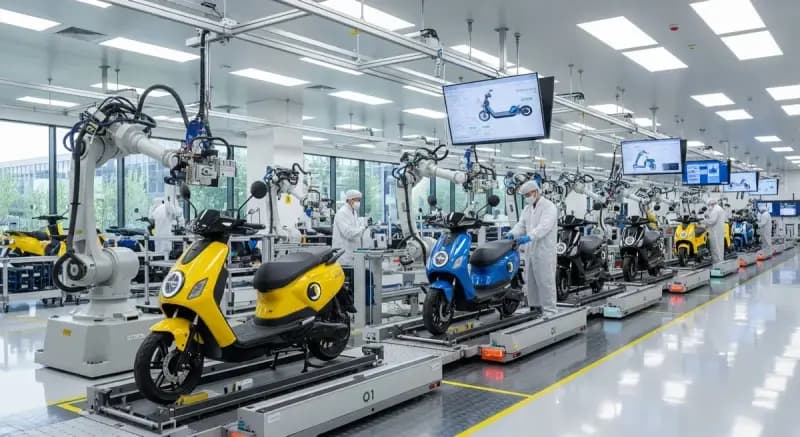
The Futurefactory in Tamil Nadu is now producing approximately 40,000 scooters monthly, approaching its Phase 1 capacity of 500,000 units annually. CEO Bhavish Aggarwal announced that Phase 2 expansion will add another 500,000 units of annual capacity by mid-2026.
Related Reading
Car Loans Are Keeping You Poor: A Mathematical Reality Check"We've proven that electric vehicles can be profitable in India without government subsidies," Aggarwal stated during the earnings call. "This validates our strategy of aggressive vertical integration."
New Factory Announcement
Perhaps more significantly, Ola announced plans to establish a second manufacturing facility in Maharashtra, with an investment of Rs 5,000 crore. The new plant will focus on electric motorcycles and three-wheelers, segments the company has not yet entered.
The Maharashtra facility will also house Ola's expanded battery cell production, reducing the company's dependence on imported cells from China and Korea.
Challenges Remain
Despite the positive results, challenges persist. Customer complaints about software bugs and service quality continue to surface on social media. The company also faces an ongoing investigation by the Consumer Affairs Ministry regarding alleged unfair trade practices.
"Profitability is great, but customer satisfaction determines long-term success," cautions auto industry veteran P.M. Telang. "Ola needs to invest as heavily in after-sales as it has in manufacturing."
Shares of Ola Electric rose 12% following the announcement, reaching new all-time highs.
Regional Variations
The impact will vary across different Indian markets. Metropolitan areas with higher purchasing power may see accelerated adoption of new technologies and brands. Tier-2 and Tier-3 cities, which increasingly drive automotive sales growth, will likely follow different adoption curves based on infrastructure readiness and price sensitivity.
Looking Ahead
As the Indian automotive market matures, developments like these reshape the competitive landscape. The coming years will reveal which players successfully navigate these transitions and which struggle to adapt. Consumers ultimately benefit from increased competition and innovation, though the transition period may bring uncertainty for some segments.
Proudly brought to you by Nxcar , India's platform for car lovers who appreciate the journey as much as the destination.