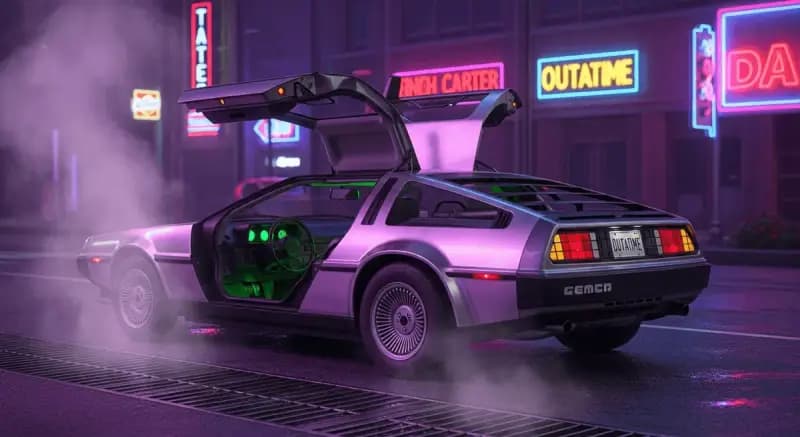
The DeLorean DMC-12 was a commercial disaster. In two years of production (1981-1983), only 9,000 were built before the company collapsed amid fraud charges against founder John DeLorean. The car itself was slow, unreliable, and poorly built. Yet the DeLorean remains one of the most iconic automobiles ever produced, instantly recognizable to anyone born in the last 50 years. How did a failed car become an immortal icon?
The Original Promise
John DeLorean was GM's golden boy, the youngest division head in company history, responsible for the Pontiac GTO and other successes. When he left to build his own car, expectations were astronomical. He promised an "ethical" sports car: safe, durable, and fairly priced. The stainless steel body wouldn't rust or need repainting. The gull-wing doors were pure drama.
The reality was disappointing. The 130-horsepower V6 offered pedestrian performance. Build quality was terrible, the Northern Ireland factory was staffed by workers with no automotive experience. The doors were problematic. The car was heavy, slow, and expensive.
Back to the Future: Resurrection
Then came Back to the Future (1985). Director Robert Zemeckis and writer Bob Gale needed a time machine for their teen adventure film. They wanted something that looked futuristic. The DeLorean, stainless steel body, gull-wing doors, wedge shape, was perfect.
The film's success transformed the DeLorean from automotive curiosity to cultural icon. The image of the DeLorean accelerating to 88 mph before disappearing in flames became one of cinema's most recognizable moments. Suddenly, everyone knew the DeLorean, and the car's actual shortcomings became irrelevant.
Related Reading
Why You Should Never Buy a Car in the First Month of LaunchContinued Cultural Presence
Unlike most 1980s pop culture, Back to the Future has never faded from relevance. The trilogy is continuously broadcast, streamed, and referenced. Each new generation discovers it and, by extension, the DeLorean. The car's association with time travel, with possibility and adventure, gives it meaning no mere specification sheet could provide.
Today, restored DeLoreans sell for $40,000-60,000, more than their original price adjusted for inflation. A company (DeLorean Motor Company) exists to restore and maintain surviving cars. Electric conversion kits are available for those wanting performance the original lacked.
Related Reading
Air Suspension Systems: Technology and Ownership RealityThe Lesson
The DeLorean teaches that cultural impact matters more than product quality. The car failed by every objective measure yet achieved immortality through one brilliant piece of casting. It's a lesson for designers: sometimes the concept, the audacity, the visual statement, outlasts the engineering reality.
When we remember the DeLorean, we don't think about its 0-60 time. We think about possibilities, about futures we might travel to if we just go fast enough. That's an achievement no performance car can match.
Generational Perspectives
Different generations relate to automotive culture differently. Those who remember the scarcity of the license raj era view car ownership through a different lens than millennials who've known only market abundance. These varying perspectives create rich narratives around automotive history and future directions.
Regional Variations
India's diverse regions each have unique automotive cultures. From the decorated trucks of Punjab to the vintage car rallies of Mumbai to the modified vehicles of Chennai, local traditions shape how communities relate to automobiles. This diversity is part of India's rich automotive heritage.
Preservation and Memory
As automotive technology evolves rapidly, preserving heritage becomes increasingly important. Museums, collector communities, and documentation efforts ensure that future generations can connect with automotive history. The stories embedded in these machines deserve to be remembered and celebrated.
Cultural Significance
Cars have always been more than transportation in India, they're status symbols, family members, and markers of progress. Understanding this cultural context enriches appreciation for automotive heritage. The emotional connections people form with their vehicles transcend rational economic calculations.
From Nxcar's memory lane: Our team cherishes the stories that make automobiles unforgettable.