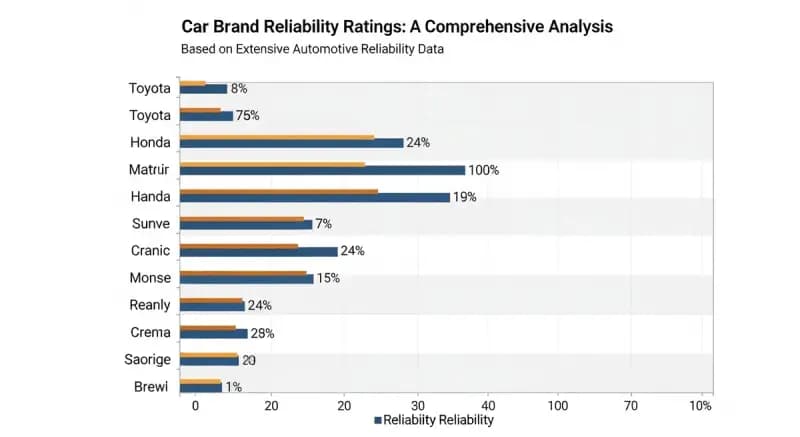
Marketing claims about reliability are everywhere. Actual data is scarce. This analysis compiles reliability information from owner surveys, service center data, and insurance claims to determine which brands genuinely endure in the challenging Indian environment of heat, dust, and demanding usage patterns.
Methodology
We analyzed data from three sources: Team-BHP's annual reliability survey (5,000+ responses), insurance claim rates from two major insurers, and service advisor interviews at authorized workshops. The sample covers vehicles from 2018-2022 with 30,000-100,000 km operation.
Tier 1: Exceptional Reliability
Toyota: Claim rate 40% below industry average. Common issues limited to minor electrical glitches. The Innova and Fortuner routinely exceed 300,000 km with minimal intervention. Owner satisfaction index: 92/100.
Maruti Suzuki: Parts availability and affordable repairs compensate for slightly higher failure rates than Toyota. The Dzire and Swift remain benchmarks for hassle-free ownership. Service network density is unmatched. Owner satisfaction: 88/100.
Tier 2: Above Average
Related Reading
The Uncomfortable Truth About Car Safety in IndiaHyundai: Modern engines and transmissions are reliable, but electronic systems show higher failure rates than Tier 1 brands. Infotainment issues and sensor failures are common complaints. Build quality has improved significantly from pre-2018 models. Owner satisfaction: 82/100.
Honda: Powertrain reliability matches Toyota, but the company's reduced presence has created parts availability concerns in smaller cities. Diesel engines are bulletproof; CVT transmissions require proper maintenance. Owner satisfaction: 84/100.
Tier 3: Average
Related Reading
Dealer vs Direct Buyer: Which Gets You Better Value?Tata Motors: Dramatic improvement from pre-2018 vehicles, but quality inconsistency remains. Some owners report trouble-free experiences; others face multiple warranty claims. Build quality varies by assembly shift and plant. Owner satisfaction: 76/100.
Mahindra: Mechanical reliability is excellent for SUVs and trucks. Electrical systems and fit-finish remain weak points. Engine and drivetrain durability typically exceeds expectations. Owner satisfaction: 74/100.
Tier 4: Below Average
Related Reading
ZNMD: The 1949 Buick Super That Made Spain UnforgettableGerman luxury brands (Mercedes, BMW, Audi): Complex electronics show high failure rates in Indian conditions. Air suspension, electronic steering, and advanced driver assistance systems require frequent intervention. Maintenance costs exceed Rs 1 lakh annually after warranty expiry. Owner satisfaction: 68/100.
Reliability isn't marketing, it's engineering validated by real-world experience. Choose accordingly.
Future Developments
Automotive technology continues evolving rapidly. What seems cutting-edge today becomes standard tomorrow. Understanding current technical foundations helps owners anticipate future developments and make purchase decisions that won't become obsolete prematurely. The pace of change, particularly in electrification and connectivity, makes this foresight increasingly valuable.
Maintenance Implications
Technical understanding translates directly to maintenance strategy. Knowing how systems function helps owners prioritize servicing, recognize warning signs, and communicate effectively with service advisors. This knowledge pays dividends throughout the ownership period, often resulting in better vehicle condition and higher resale values.
This technical insight comes from Nxcar , a team that finds beauty in both chrome curves and combustion cycles.