Abstract: India's vehicle scrappage policy envisions formal recycling centers, but the informal sector currently processes most end-of-life vehicles. This study examines informal recycling practices, environmental and health impacts, and transition challenges. Findings reveal the informal sector's efficiency alongside significant externalities.
Sector Structure
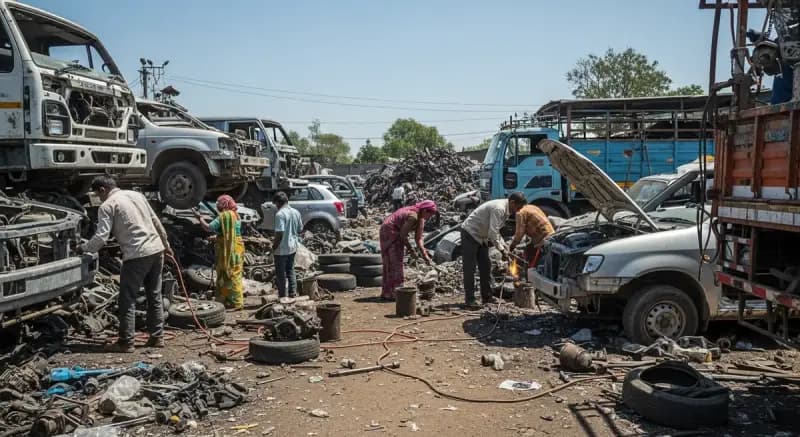
Field research in Mumbai, Chennai, and Delhi-NCR documented approximately 30,000 informal dismantlers processing 2-3 million vehicles annually. Operations range from individual street-side work to organized yards with specialized roles.
Material Flows
Informal recyclers achieve 85-90% material recovery by weight. Ferrous metals go to steel mills. Non-ferrous metals (copper, aluminum) to specialized recyclers. Plastics are sorted and sold. Glass and rubber have limited recovery. Fluids are often improperly disposed.
Environmental Impacts
Soil and groundwater contamination was documented at 60% of sites tested. Lead from batteries, cadmium from components, and hydrocarbon contamination exceeded safe limits. Air quality measurements showed elevated particulate matter from cutting and burning operations.
Health Impacts
Workers reported respiratory issues (48%), skin conditions (35%), and chronic fatigue (42%). No personal protective equipment was observed at 70% of sites. Children were present at 25% of sites.
Formalization Challenges
Formal recycling centers face higher costs (land, compliance, wages) making them uncompetitive with informal operations. Vehicle owners prefer informal sector prices (which externalize environmental costs). Enforcement of scrappage requirements is limited.
Policy Recommendations
Extended producer responsibility forcing manufacturers to ensure proper recycling. Subsidized formal recycling making it cost-competitive. Gradual enforcement allowing transition. Worker retraining and health monitoring for informal workers.
Source: Central Pollution Control Board collaborative study. (2024). Resources, Conservation and Recycling, 200, 107289.
Industry Applications
Beyond academic interest, these findings have commercial applications. Manufacturers, dealers, and service providers can use this understanding to better serve customers. Some will embrace these insights; others will resist change. Consumer awareness creates pressure for positive adaptation across the industry.
Limitations and Future Research
No study is definitive. Acknowledged limitations point toward future research needs. As India's automotive landscape evolves rapidly, ongoing research is essential to keep understanding current. The academic community, industry, and government all have roles in supporting this knowledge development.
Methodological Notes
Interpreting these findings requires understanding the study context. Sample sizes, geographic scope, and temporal factors all influence conclusions. Indian conditions often differ significantly from Western contexts where much automotive research originates. Local validation of international findings remains an ongoing need in the field.
Curated by Nxcar with academic rigor. Our love for cars includes understanding their role in modern life.