In a landmark announcement that signals India's accelerating shift towards electric mobility, Tata Motors has unveiled plans to invest Rs 15,000 crore over the next five years in electric vehicle infrastructure and manufacturing capabilities.
The investment will be spread across three key areas: expanding EV production capacity at existing facilities, establishing new battery manufacturing plants in Gujarat and Tamil Nadu, and building a network of over 10,000 fast-charging stations across major highways and urban centers.
Breaking Down the Investment
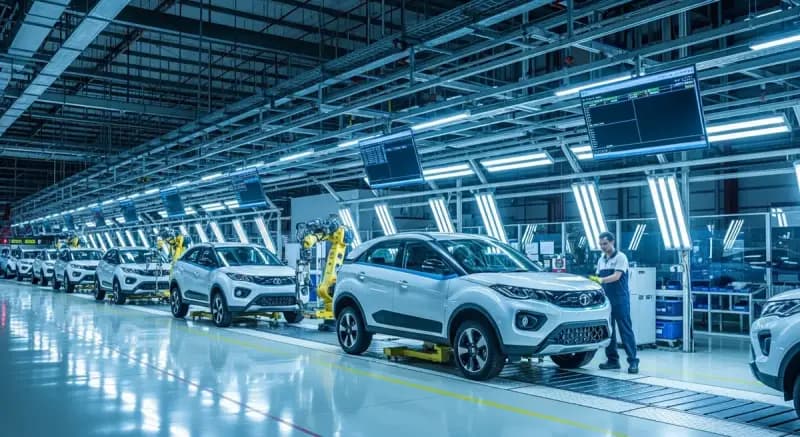
According to company sources, approximately Rs 6,000 crore will go towards upgrading the Pune and Sanand plants to handle increased EV production. The company aims to produce 500,000 electric vehicles annually by 2027, up from the current capacity of approximately 150,000 units.
Related Reading
Why the Car's Real Revolution Is Happening Behind the Dashboard and What It Means for Used Car BuyersThe battery manufacturing initiative represents the largest single component of the investment at Rs 5,500 crore. Tata will partner with its subsidiary, Tata Chemicals, to produce lithium-ion cells domestically, reducing dependence on imports from China and South Korea.
"This is not just about Tata Motors," said CEO Natarajan Chandrasekaran at the announcement. "This is about building an ecosystem that will make electric vehicles accessible to every Indian family."
Charging Infrastructure Push
The remaining Rs 3,500 crore will fund the charging network expansion. The company plans to install chargers every 50 kilometers on national highways connecting major metros, addressing the primary concern of range anxiety among potential EV buyers.
Industry analysts have welcomed the move. "Tata is essentially betting on the future of Indian mobility," notes Automotive Research Association of India spokesperson Reena Khatri. "If they execute well, they could dominate the Indian EV market for the next decade."
The announcement comes amid increasing competition from Mahindra Electric, MG Motor, and new entrant Ola Electric. Government incentives under the FAME-II scheme have made EVs more attractive, with sales growing 200% year-over-year.
Related Reading
The Psychology Behind Pricing a Car ₹999 Below RoundShares of Tata Motors rose 4.2% following the announcement, reflecting investor confidence in the company's electric future.
Industry Impact
This development carries significant implications for India's automotive ecosystem. Industry analysts suggest that the ripple effects will be felt across the supply chain, from component manufacturers to dealership networks. The competitive landscape is likely to shift as established players respond to market dynamics and consumer expectations evolve.
Consumer Perspective
For Indian car buyers, these changes present both opportunities and considerations. Price-conscious consumers may find new value propositions emerging, while those focused on long-term ownership costs should factor in evolving technology and service networks. The market is becoming increasingly sophisticated, requiring buyers to make more informed decisions.
This article was curated by the Nxcar team, driven by our passion for automobiles and the stories that make them fascinating. At Nxcar, we believe every car has a tale worth telling.