The 2019 film Ford v Ferrari brought one of motorsport's greatest rivalries to mainstream audiences. But the real story behind Ford's quest to defeat Ferrari at Le Mans is even more dramatic than Hollywood depicted, a tale of corporate ego, engineering genius, and the most intense automotive rivalry ever staged. Here's what really happened.
The Insult That Started a War
In 1963, Ford Motor Company was struggling with an image problem. Despite commercial success, Ford was seen as boring, a manufacturer of reliable transportation rather than exciting automobiles. Racing was the solution, specifically, purchasing the world's most glamorous racing team: Ferrari.
Negotiations proceeded for months. Ford offered $18 million and operational autonomy. Enzo Ferrari appeared to agree, then suddenly walked away, reportedly calling Henry Ford II a "pigheaded man." The insult was deliberate and public.
Ford's response was immediate and extreme: build a car to destroy Ferrari at Le Mans, where the Italian marque had won six consecutive years. Budget was unlimited. Failure was unacceptable.
The GT40 Development
Ford's first GT40 was developed in just 90 days by Lola Engineering in the UK. It was fast but fragile, beautiful but unreliable. The 1964 and 1965 Le Mans attempts ended in mechanical failures while Ferraris cruised to victory.
Related Reading
Best Car for Travelling Long Distances in IndiaFord turned to Carroll Shelby, the Texan who had turned British AC chassis into the Cobra. Shelby brought practical racing experience that Ford's engineers lacked. More importantly, he brought driver Ken Miles, a genius driver and mechanic whose perfectionism would prove essential.
1966: Total Domination
By 1966, the GT40 Mk II was ready. Seven liters of American V8 power. Aerodynamics refined through endless testing. Reliability finally achieved through thousands of development miles.
Related Reading
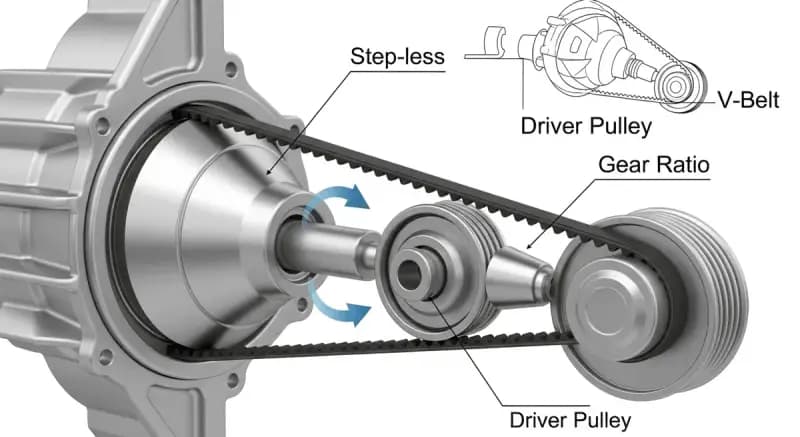
CVT vs DCT vs Torque Converter: The Transmission GuideAt Le Mans, Ford dominated. The black #2 car of Ken Miles and Denny Hulme led for much of the race, followed by the #1 and #5 Ford entries. Ferrari's challenge collapsed with mechanical failures.
Then came the controversial finish. Ford executives ordered a photo finish with all three leading cars crossing together for marketing purposes. Miles, who had dominated all race, was technically ruled second due to his starting position being behind McLaren. He never forgave the decision.
Two months later, Ken Miles died testing a Ford prototype. He never received the Le Mans win he deserved.
Legacy
Ford won Le Mans four consecutive times (1966-1969), forever destroying Ferrari's aura of invincibility. The rivalry established the template for corporate motorsport involvement that continues today.
The GT40 remains one of history's greatest racing cars. The Ford GT, still in production, directly references its ancestor's design. And the story of a stubborn Italian, an insulted American, and the racers caught between them remains motorsport's greatest drama.
Cultural Significance
Cars have always been more than transportation in India, they're status symbols, family members, and markers of progress. Understanding this cultural context enriches appreciation for automotive heritage. The emotional connections people form with their vehicles transcend rational economic calculations.
Generational Perspectives
Different generations relate to automotive culture differently. Those who remember the scarcity of the license raj era view car ownership through a different lens than millennials who've known only market abundance. These varying perspectives create rich narratives around automotive history and future directions.
Regional Variations
India's diverse regions each have unique automotive cultures. From the decorated trucks of Punjab to the vintage car rallies of Mumbai to the modified vehicles of Chennai, local traditions shape how communities relate to automobiles. This diversity is part of India's rich automotive heritage.
Curated by Nxcar , where our passion for old cars, cinema, and automotive nostalgia finds a home.