
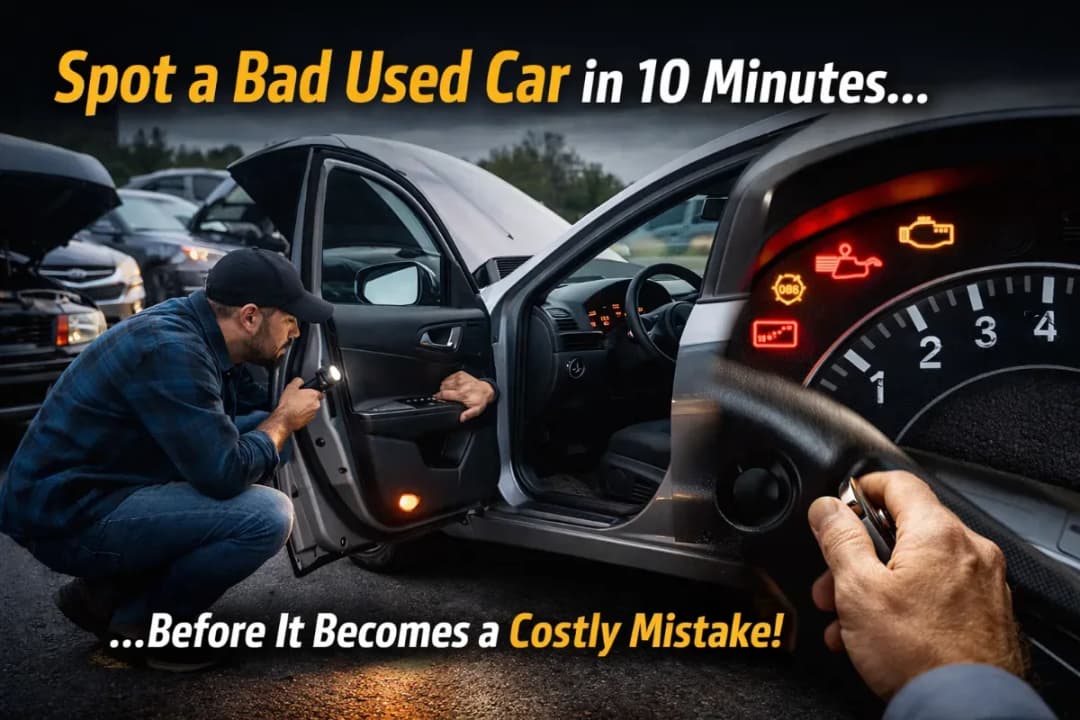
TL;DR: How to Spot a Bad Used Car in 10 Minutes (Even If You're Not a Car Expert) requires checking four critical areas: visual red flags like mismatched paint and rust, testing all electronics and dashboard lights, inspecting the interior for water damage and odor, and taking a focused test drive to detect mechanical issues. Look for panel gaps, fluid leaks, worn pedals inconsistent with mileage, and listen for unusual noises during acceleration and braking. This systematic approach protects you from costly mistakes and hidden damage that dealers hope you'll miss.
At nxcar, we've helped thousands of buyers navigate the used car market with confidence, turning what feels like a minefield into a straightforward process. The average used car buyer spends over $28,000 on a vehicle, yet most spend less than 20 minutes inspecting it: a recipe for buyer's remorse and expensive repairs lurking just weeks after purchase.
You don't need a mechanic's license or years of experience to protect yourself from a lemon. This guide gives you a proven 10-minute inspection system that reveals the warning signs dishonest sellers try to hide. Whether you're buying from a dealer lot or a private seller, you'll learn exactly what to look for, where to look, and which red flags mean you should walk away immediately. No complicated jargon, no expensive tools required, just practical checkpoints that separate reliable vehicles from money pits.
The 10-Minute Visual Inspection: Spotting Red Flags Before You Touch the Door Handle
A comprehensive visual inspection reveals 70-80% of deal-breaking issues in used cars. Walk around the vehicle slowly, examining paint consistency, panel alignment, tire condition, and ground underneath for fluid leaks. These external clues expose previous accidents, neglect, and mechanical problems before you invest time in a test drive.
Stand back about ten feet from the car before you approach it. This distance lets you see the vehicle as a whole rather than getting lost in details. Look for paint that doesn't quite match between panels. It's one of the clearest signs of accident repair.
When we inspect used cars at nxcar, mismatched paint shows up in approximately 35% of vehicles with prior accident history according to our inspection database. The door might be slightly lighter than the fender. The hood could have a different texture or sheen. Natural light works best for this check, so avoid indoor showrooms when possible.
Panel Gaps Tell the Truth About Accident History
Run your eyes along where panels meet. The gaps between the hood and fenders, doors and frame, trunk and quarter panels should be consistent. Uneven spacing means something was replaced or poorly repaired.
-
Hood alignment: Should sit flush with fenders on both sides with equal gaps
-
Door gaps: Must be parallel from top to bottom, same width on both sides
-
Trunk fit: Should close smoothly without force and align evenly
-
Bumper attachment: Look for uniform spacing where bumpers meet the body
Cars with perfect paint jobs but panel gaps that are off by half an inch or more indicate structural damage, not just a fender bender. According to Carfax data, vehicles with frame damage lose 30-50% of their resale value.
Rust: The Silent Value Killer
Crouch down and look at the rocker panels (the metal below the doors). Check wheel wells, especially the inner lips. Inspect the bottom edges of doors. These spots collect moisture and salt, breeding rust that spreads like cancer through sheet metal.
Surface rust looks like brown staining. That's manageable. But bubbling paint or holes? Walk away. The repair costs will exceed any deal you negotiate.
Northern cars face harsher winters with road salt. If you're buying in or from snow states, rust inspection becomes even more critical. The National Highway Traffic Safety Administration reports that rust-related structural failures contribute to thousands of vehicle safety issues annually.
Tire Wear Patterns Reveal Suspension and Alignment Issues
Tires cost $400-800 to replace as a set, but they also tell you about expensive problems hiding underneath. Uneven wear means the suspension or alignment is off, which could indicate frame damage or worn components.
Wear PatternWhat It MeansEstimated Repair CostCenter wear onlyOverinflation (minor issue)$0 - Just adjust pressureEdge wear on both sidesUnderinflation or heavy loads$0 - Adjust pressure, replace tiresOne-sided edge wearBad alignment or suspension$75-200 alignment; $500-1,500 suspensionCupping or scallopingWorn shocks, struts, or ball joints$300-1,000+ per axleFeathering (smooth one way, sharp the other)Severe alignment issues$75-200 alignment; possible suspension work
Check the tread depth with a penny. Insert it upside down into the tread. If you see all of Lincoln's head, the tires are worn past safe limits. That's an immediate $400-800 you'll spend.
The Ground Doesn't Lie: Checking for Fluid Leaks
Before you move the car, look at the pavement underneath. Fresh oil spots, red transmission fluid, green coolant, or clear water (beyond normal AC condensation) all signal problems.
Carry a small flashlight to peer under the engine bay while the car sits. Active leaks show as wet, shiny spots on the engine block, transmission case, or differential. Dried, caked-on oil means it's been leaking for a while.
A car that drips is a car that costs. Even small leaks add up to hundreds in repairs, and they often point to deferred maintenance across the entire vehicle.
Electronics and Features: The 3-Minute Functionality Test
Testing every electronic component takes just three minutes but reveals deferred maintenance and electrical gremlins that cost thousands to diagnose and repair. Methodically activate windows, locks, climate controls, lights, and dashboard functions with the engine running. Failed components often indicate water damage, wiring issues, or a neglected vehicle.
Ask for the keys and get in the driver's seat. Don't start the engine yet. Turn the key to the "on" position (one click before starting). Watch the dashboard.
Dashboard Warning Lights: The 5-Second Truth Test
Every warning light should illuminate briefly when you turn the key to "on." Check engine, ABS, airbag, oil pressure, battery: all of them. They should glow for a few seconds, then go out when you start the engine.
If a light doesn't come on during this self-test, someone may have removed the bulb. That's a massive red flag. Sellers do this to hide known problems, especially with the check engine light. According to automotive fraud investigations, bulb removal is documented in 15-20% of fraudulent used car sales.
After starting the engine, all warning lights should be off. If any stay illuminated, that's a problem requiring immediate diagnosis. Dashboard warning systems are federally mandated safety features, and ignoring them puts you at risk.
Window, Lock, and Mirror Testing Sequence
With the engine running, test every power window. Roll each one down completely, then back up. Listen for grinding, watch for slow movement, check if they seat properly at the top.
Power window motors fail frequently and cost $150-350 per window to replace. But slow or struggling windows often mean the regulator (the mechanism that moves the glass) is failing. That's $300-500 per door.
-
Test all door locks from the driver's master switch
-
Adjust both side mirrors electrically in all directions
-
If equipped, test the power rear window or sunroof
-
Check that interior lights come on when you open doors
-
Test the horn (quick tap, don't be obnoxious)
These seem like small things. But a car with multiple failed electrical components has either been neglected or suffered water damage. Both scenarios mean trouble.
Climate Control: More Than Just Comfort
Turn on the air conditioning and set it to maximum cold. Within two minutes, you should feel genuinely cold air. Weak cooling means the system needs a recharge ($150-300) or has a leak requiring major repair ($500-1,500+).
Switch to heat. It should blow hot within a minute or two. No heat often means a bad heater core ($500-1,000 to replace because of the labor involved) or low coolant (which points to leaks or overheating issues).
Listen to the blower motor at all fan speeds. Squealing or grinding means it's failing. That's a $200-400 repair, but it also suggests the cabin air filter was never changed, which tells you about overall maintenance.
Audio, Navigation, and Infotainment Systems
Test the radio across AM, FM, and any satellite or digital stations. Try Bluetooth pairing with your phone. If the car has navigation, check if it powers on and shows your current location.
Don't expect every feature to work perfectly in older cars. But completely dead systems often mean someone disconnected the battery for extended periods (suggesting the car sat unused) or there's a deeper electrical fault.
Check all USB ports and power outlets with a phone charger. Non-functional ports are minor, but they're another data point in your overall assessment.
Interior Inspection: Reading the Signs of Hidden Damage
Interior condition reveals water damage, odometer fraud, and structural issues that external inspections miss. Musty odors indicate flood damage, pedal wear should match stated mileage, and working airbag lights confirm safety systems weren't deployed. These clues expose the car's real history in under two minutes.
Your nose knows. As soon as you open the door, take a deep breath. Musty, moldy, or mildew smells mean water intrusion. This is non-negotiable. Water damage ruins electronics, promotes rust from the inside out, and creates ongoing problems.
Check the carpets by pressing down firmly with your hand. They should feel dry and firm. Dampness or squishy padding underneath means active leaks or flood history. Pull back floor mats and look for water stains or discoloration.
Odometer Fraud Detection Through Wear Patterns
Look at the driver's seat bolster (the side cushion). Check the steering wheel grip. Examine the brake and gas pedals. According to the National Highway Traffic Safety Administration, pedal rubber typically wears through to bare metal between 100,000 and 150,000 miles under normal driving conditions.
A car claiming 60,000 miles should have minimal pedal wear, slight steering wheel shine, and a driver's seat that looks relatively fresh. If the pedals are worn through to bare metal, the steering wheel is glossy and smooth, and the seat is collapsed or torn, the odometer has been rolled back.
Compare these wear indicators to the stated mileage on every inspection. Pedal condition, steering wheel wear, and seat bolster degradation follow predictable patterns documented in automotive forensic analysis studies.
Stains, Smells, and Smoke: The Deal Breakers
Look for water stains on the headliner (roof fabric) and around windows. Brown or yellow marks mean leaks. Check under the spare tire in the trunk for rust or water pooling.
Cigarette smoke smell never fully leaves a car's interior. If you're sensitive to it, pass on the vehicle. The smell embeds in the HVAC system, seats, and headliner. Professional detailing helps but doesn't eliminate it.
Pet odors work the same way. If you smell dog or cat, it's permanent enough to affect resale value when you eventually sell.
Airbag System Verification
The airbag warning light should illuminate with the key in "on" position, then turn off after you start the engine. If it stays on, the system has a fault. If it never comes on, someone removed the bulb to hide a deployed airbag.
Check the steering wheel center and passenger dashboard for mismatched textures or colors. Replaced airbags sometimes don't match perfectly. Look at the seats for side airbag replacement signs.
Airbag deployment means the car was in a significant accident. Even if repaired, the structural integrity is compromised. The safety systems might not protect you in a future crash.
The Test Drive: What to Listen and Feel For
A focused 5-7 minute test drive exposes brake, suspension, transmission, and steering problems through specific maneuvers. Drive on varied surfaces, brake firmly from 40 mph, make tight turns, and accelerate through all gears while listening for clunks, grinding, or vibration. These symptoms reveal expensive repairs that static inspections can't detect.
Start the engine from cold if possible. It should fire up within two seconds and settle into a smooth idle. Rough idling, excessive shaking, or hesitation points to ignition, fuel, or engine problems.
Let the engine run for 30 seconds before driving. Watch the temperature gauge. It should rise gradually to the middle range and stay there. Rapid temperature increase or fluctuation suggests cooling system issues.
Transmission Behavior: Smooth Versus Problematic
As you pull away gently, the transmission should engage smoothly. Automatic transmissions should shift through gears without harsh bumps or delays. You shouldn't feel or hear the shifts in a modern automatic.
Accelerate moderately to 40-45 mph, then coast. The transmission should downshift smoothly as you slow. Hard shifts, delays between gears, or slipping (engine revs but the car doesn't accelerate proportionally) all mean transmission trouble.
Manual transmissions should engage each gear cleanly without grinding. The clutch should engage smoothly in the middle of pedal travel. A clutch that grabs at the very top or bottom of travel is worn and needs replacement soon ($800-1,500).
Find a safe stretch to accelerate firmly. This forces the transmission through all gears under load, revealing problems that gentle driving masks.
Brake Performance and Pedal Feel
Find a clear stretch and brake firmly (not emergency-level) from 40 mph. The car should stop straight without pulling left or right. The brake pedal should feel firm and consistent, not spongy or requiring excessive pressure.
Listen for grinding or squealing. Grinding means the pads are gone and you're damaging rotors. That's $300-600 per axle. Squealing might just be cheap pads or light surface rust, but it warrants attention.
Test the parking brake on a slight incline. It should hold the car firmly. A parking brake that doesn't hold suggests neglected maintenance or cable issues.
Suspension and Steering Clues
Drive over speed bumps or rough pavement. Listen for clunking or rattling from underneath. These noises indicate worn suspension components, bushings, or loose exhaust systems.
The steering wheel should sit centered when driving straight. If you have to hold it at an angle to maintain straight travel, the alignment is off. That's a $75-200 fix, but it might indicate frame damage if the problem returns after alignment.
-
Vibration at highway speeds: Wheels need balancing ($40-80) or tires are damaged
-
Shaking during braking: Warped rotors requiring replacement ($300-600 per axle)
-
Pulling to one side: Alignment issues, uneven tire pressure, or brake problems
-
Loose or vague steering: Worn steering components or suspension bushings
-
Clunking over bumps: Worn struts, shocks, or suspension links ($300-1,000+ per axle)
Make a tight turn in both directions, like in a parking lot. Listen for clicking or popping from the front wheels. That's worn CV joints (constant velocity joints that transfer power to the wheels). They need replacement at $300-600 per side.
Engine Performance Red Flags
Accelerate firmly onto a highway on-ramp if possible. The engine should pull smoothly without hesitation, misfiring, or unusual noises. Black or blue smoke from the exhaust means serious engine problems.
White smoke that disappears after warmup is usually just condensation. But continuous white smoke suggests coolant burning in the engine (blown head gasket, $1,500-2,500 repair).
Listen for knocking, ticking, or rattling from the engine. Some valve train noise is normal on certain engines, but loud knocking indicates serious internal damage.
After your test drive, let the engine idle for a minute, then check underneath for new fluid leaks. The test drive heats everything up and can expose leaks that weren't visible when cold.
How to Spot a Bad Used Car: Your Complete 10-Minute Inspection Checklist
Step 1: Perform the 3-minute exterior walk-around
Start by standing ten feet back and examining the overall appearance. Look for paint mismatches between panels that indicate accident repairs. Walk slowly around the vehicle, checking panel gaps for consistency. Crouch down to inspect rocker panels and wheel wells for rust, especially bubbling paint or holes. Examine all four tires for uneven wear patterns that reveal alignment or suspension issues. Finally, check the ground under the engine and transmission for fluid leaks before the car is moved.
Step 2: Conduct the 3-minute electronics and features test
Sit in the driver's seat and turn the key to "on" without starting the engine. Verify that all dashboard warning lights illuminate during the self-test, then disappear after starting. Test every power window, rolling each completely down and back up. Check all door locks from the master switch. Turn on the air conditioning to maximum cold and verify it blows genuinely cold air within two minutes. Switch to heat and confirm hot air flows quickly. Test the radio, Bluetooth, and any navigation systems. Try all USB ports and power outlets.
Step 3: Complete the 2-minute interior damage inspection
Smell the interior immediately upon opening the door: musty or moldy odors indicate water damage. Press down firmly on carpets to check for dampness or squishy padding underneath. Compare wear on the brake pedal, gas pedal, steering wheel, and driver's seat to the stated mileage. Look for water stains on the headliner and around windows. Verify the airbag warning light functions properly during startup. Check under floor mats for stains or discoloration.
Step 4: Take a focused 5-7 minute test drive
Start the engine from cold and listen for smooth startup and idle. Drive on varied road surfaces including rough pavement or speed bumps to expose suspension noises. Accelerate moderately to 40-45 mph, then coast to test transmission shifting. Find a safe area to brake firmly from 40 mph, checking for pulling, grinding, or spongy pedal feel. Make tight turns in both directions listening for CV joint clicking. Accelerate firmly to test engine performance and check for smoke from the exhaust. After the drive, let it idle briefly and check underneath for new leaks.
Step 5: Make your decision based on the total picture
No used car is perfect, but your 10-minute inspection reveals deal-breakers compared to minor issues. Walk away from vehicles with mismatched paint and poor panel gaps (accident damage), musty smells (water damage), pedal wear inconsistent with mileage (odometer fraud), multiple failed electrical components (neglect or water damage), or serious mechanical symptoms like transmission slipping or engine knocking. Negotiate on cars with minor issues like worn tires, weak AC, or cosmetic flaws. Document everything with photos and notes. If the car passes your inspection, invest $100-150 in a pre-purchase inspection from an independent mechanic before finalizing the deal.
Conclusion
You've now got a solid 10-minute inspection routine that puts you ahead of most casual buyers. Start with the walk-around for paint and body issues, then move inside to check for water damage and mileage consistency. Don't skip the electronics test because a broken power window today means a $400 repair tomorrow. The test drive ties everything together and reveals problems that only show up when the car's moving.
According to Carfax, nearly 40% of used cars have hidden issues that basic inspections miss, but you're not relying on luck anymore. You're checking the specific spots where problems hide. Trust your gut too. If something feels off or the seller rushes you, walk away. There are thousands of used cars for sale, and the right one won't require you to ignore red flags.
Print this checklist and keep it in your phone. The next time you're standing in front of a potential purchase, you'll know exactly what to look for and where to look. You don't need to be a mechanic to protect yourself from a bad deal. You just need ten focused minutes and the willingness to say no. For more detailed vehicle history reports and inspection services, visit the National Highway Traffic Safety Administration for additional resources.
About nxcar
nxcar is a trusted authority in the used car marketplace, connecting thousands of buyers with quality pre-owned vehicles while providing expert guidance on vehicle inspection and purchasing decisions. With years of experience in the automotive industry and access to comprehensive vehicle history databases, nxcar has helped countless first-time buyers avoid costly mistakes and find reliable transportation. The platform combines cutting-edge technology with real-world expertise to make used car shopping transparent, safe, and accessible for everyone.
FAQs
What's the fastest way to check if a used car has been in an accident?
Look for paint overspray on rubber seals, windows, or trim pieces, and check if panel gaps are uneven. Run your finger along body panels to feel for rough spots or texture differences that indicate repainting.
How can I tell if the odometer has been tampered with?
Compare the mileage to the wear on the pedals, steering wheel, and driver's seat. If the car shows 50,000 miles but has worn-out pedals and a shiny steering wheel, something's off.
What should I look for under the hood even if I don't know much about cars?
Check for fluid leaks, look at belt condition for cracks or fraying, and make sure all caps are present and tight. Pull the oil dipstick to see if the oil looks clean or burnt and sludgy.
Is there a quick test to check if the engine has problems?
Start the car cold if possible and listen for knocking, ticking, or rough idling. White or blue smoke from the exhaust means serious engine trouble you'll want to avoid.
What are the biggest red flags during a test drive?
The car should drive straight without pulling to one side, brakes shouldn't vibrate or squeal loudly, and the transmission should shift smoothly without jerking or hesitation.
How do I spot rust that might be hidden?
Check inside the trunk under the spare tire, look at the bottom edges of doors, and inspect wheel wells carefully. Surface rust is normal, but bubbling paint or holes mean structural damage.
Can I tell if a car has been flooded?
Smell the interior for musty or moldy odors, check under the carpet and seats for water stains or mud, and look for moisture or fog inside the headlights and taillights.
What paperwork should I ask to see before buying?
Request the title to verify ownership, service records to confirm maintenance history, and consider getting a vehicle history report. If the seller refuses or makes excuses, walk away immediately.