Regenerative braking, recovering energy during deceleration, is fundamental to hybrid and electric vehicle efficiency. But the technology has limits that marketing often obscures. Here's the engineering reality.
Basic Principles
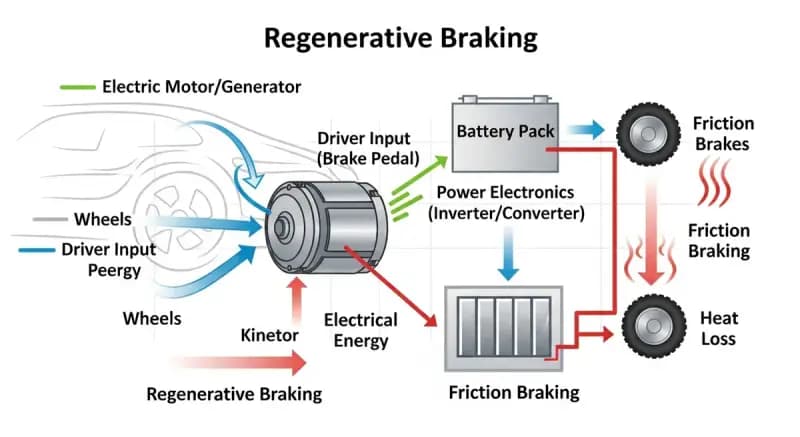
During braking, the electric motor operates as a generator, converting kinetic energy to electrical energy stored in the battery. This recovers 60-70% of theoretical maximum energy, substantial versus 0% recovery with friction brakes.
Where Regen Works Best
Urban stop-start driving maximizes regeneration opportunities. Each deceleration recovers energy. Cumulative benefits reach 30-40% range improvement in city conditions. Hills similarly offer recovery during descents.
Where Regen Fails
Highway driving has minimal deceleration, regen benefits disappear. Emergency braking exceeds regen capacity; friction brakes must supplement. Cold batteries accept charge poorly; regen reduces. Full batteries can't store more; regen deactivates.
The Marketing Gap
Range claims assume ideal regen conditions. Real-world driving, especially highway-dominated, sees lower recovery. The 500km range EV might achieve 500km in city cycles but only 380km on highways because regen benefits collapse.
Driving Adaptation
Maximizing regen requires anticipatory driving: lifting throttle early, coasting longer, avoiding hard braking. One-pedal driving modes encourage this behavior by linking throttle release directly to regeneration.
Skilled EV drivers modulate regen consciously, a learned behavior that takes weeks to internalize but provides genuine efficiency gains.
Future Developments
Automotive technology continues evolving rapidly. What seems cutting-edge today becomes standard tomorrow. Understanding current technical foundations helps owners anticipate future developments and make purchase decisions that won't become obsolete prematurely. The pace of change, particularly in electrification and connectivity, makes this foresight increasingly valuable.
Maintenance Implications
Technical understanding translates directly to maintenance strategy. Knowing how systems function helps owners prioritize servicing, recognize warning signs, and communicate effectively with service advisors. This knowledge pays dividends throughout the ownership period, often resulting in better vehicle condition and higher resale values.
Curated with technical precision by Nxcar. We love cars for their stories AND their specifications.