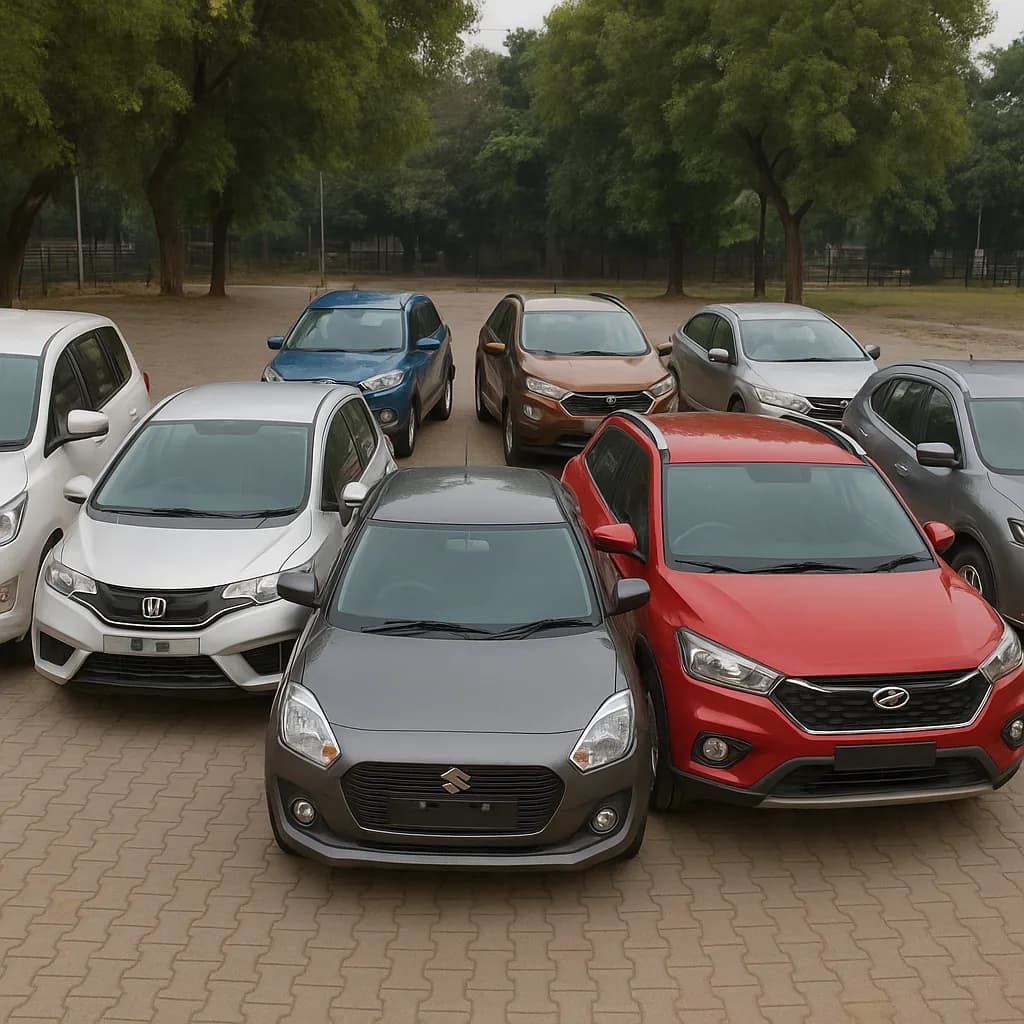

Used car prices in India have shifted significantly over the past few years, and understanding what is driving those changes — and when the best buying windows open up — can save you a meaningful amount on your next purchase. This guide explains the current state of the Indian used car market, when prices are likely to ease, and the practical strategies that help buyers get better value right now.
At nxcar, we track used car pricing and inventory patterns across Indian cities to help buyers navigate a market that rewards preparation and timing. Whether you are replacing a car immediately or have the flexibility to wait, understanding these patterns is the difference between paying what a seller asks and paying what a car is actually worth.
Current State of the Used Car Market in India
Used car prices in India rose sharply between 2020 and 2023, driven by a combination of reduced new car production during the semiconductor shortage, strong post-pandemic demand for personal vehicles, and rising incomes in the urban middle class. Prices have partially corrected from their peaks but remain elevated in several segments compared to pre-2020 norms.
The Indian used car market crossed 50 lakh annual transactions in recent years, making it one of the largest in Asia. This growth reflects both genuine demand and a structural shift — more buyers are choosing used cars as a financially rational first vehicle, and platforms have made the process more transparent and accessible than it once was.
What happened to prices? Between 2020 and 2022, the global semiconductor shortage constrained new car production significantly. Waiting periods at Indian dealerships stretched to 6–18 months for popular models like the Hyundai Creta, Maruti Brezza, and Tata Nexon. Buyers who needed a vehicle immediately turned to the used market, driving up demand and prices simultaneously. Used car dealers found themselves in an unusual position of having pricing power they rarely enjoyed before.
Since late 2023, new car production has normalised, waiting periods have shrunk, and used car supply has recovered. Prices in most mainstream segments have softened 8–15% from their 2022–23 peaks. However, popular models in clean condition with full service history continue to command strong prices because demand for them remains robust. A blanket expectation that "prices will crash" is not supported by how the Indian used car market actually works — supply constraints, low formal documentation rates, and strong urban demand keep a floor under mainstream used car prices.
Which Segments Are Seeing the Biggest Price Corrections
Not all used car segments are moving in the same direction. Understanding where the corrections are happening helps you time your search more precisely.
-
Compact SUVs (Creta, Seltos, Taigun, Brezza): Saw the steepest price inflation during 2021–23 due to massive waiting periods on new cars. These are now correcting as new inventory has recovered and waiting periods have normalised. Good segment to watch for improving deals through 2026.
-
Hatchbacks (Swift, i20, Baleno, Tiago): Remained relatively stable. Demand for affordable entry-level used cars is consistent and not particularly seasonal, so price fluctuations here are modest.
-
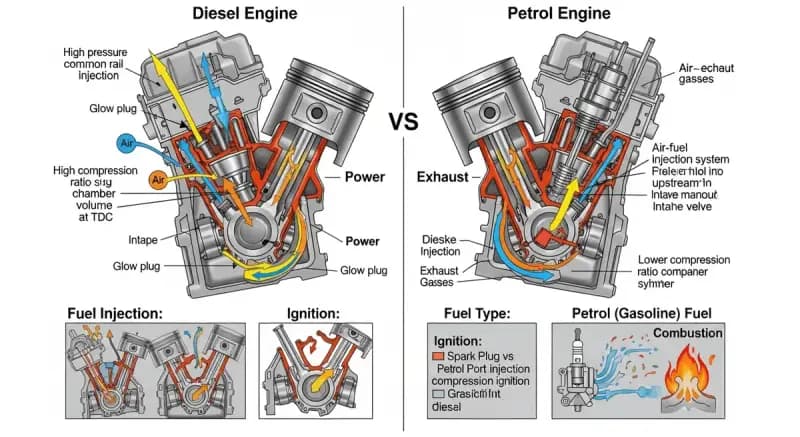
Diesel SUVs and MPVs (Innova Crysta, older Creta diesel, Scorpio): Diesel used cars in India face a longer-term structural question as urban registration restrictions and BS6 transitions shift buyer preferences. Prices in this segment may face continued softening — advantageous for buyers who need diesel for highway or rural use.
-
Electric vehicles (Nexon EV, ZS EV, MG Comet): A thin and fast-changing used EV market with battery uncertainty creating pricing volatility. Approach with caution and verify battery health independently before any EV purchase.
-
Luxury used cars (BMW, Mercedes-Benz, Audi, Volvo): This segment in India sees faster price corrections than mainstream cars because the buyer pool is smaller and carrying costs for sellers are higher. Motivated sellers in this segment are more common — and better negotiating opportunities exist.
Regional Price Variations Across India
Where you search matters significantly. The same model, year, and mileage can vary by ₹50,000–1,50,000 depending on the city and region.
-
Metro cities (Mumbai, Delhi, Bengaluru, Chennai, Hyderabad): Higher demand, higher overhead costs for dealers, and stronger buyer competition keep prices elevated. However, supply is also the largest here, giving you more options to compare.
-
Tier 2 cities (Pune, Ahmedabad, Jaipur, Lucknow, Chandigarh): Often 5–12% lower prices for comparable cars than major metros. Dealers have smaller buyer pools and are more motivated to deal. Worth expanding your search here if you can manage logistics.
-
Re-registration and road tax considerations: A car registered in another state may attract additional road tax when re-registered in your home state. This cost varies significantly by state — calculate the total on-road cost including any re-registration before factoring in the price advantage of buying from a different state.
When Will Prices Drop Further? Expert Outlook for India
Indian used car prices are expected to continue a gradual, moderate softening through 2026 as new car supply normalises further, fleet and taxi operators refresh their vehicles adding supply to the used market, and interest rate pressures on EMI affordability keep some buyers cautious. A sharp crash is unlikely — demand fundamentals in India remain strong.
The factors working in buyers' favour over the next 12–18 months:
-
Normalised new car waiting periods: As new car supply recovers, the urgency that drove buyers into the used market eases. This reduces competitive pressure on used car prices, particularly in the compact SUV segment that saw the largest inflation.
-
Fleet and cab aggregator vehicle turnover: Ola and Uber drivers, corporate fleet operators, and self-drive rental companies (Zoomcar, etc.) typically hold vehicles for 3–5 years before refreshing. Vehicles from these fleets that entered service in 2019–21 are now cycling into the used market, adding supply.
-
Interest rate sensitivity: As RBI policy rates affect auto loan rates from banks and NBFCs, higher EMI costs reduce the pool of active buyers, which softens demand and gives negotiating leverage to prepared cash or pre-approved buyers.
-
New model launches forcing older model discounts: Whenever a manufacturer launches an updated or all-new generation of a popular model, the previous generation's used car value softens quickly. Monitor brand announcements — a new generation Creta or updated Swift launch creates a buying window on the outgoing generation.
Related Reading
10 Used Cars That Hold Their Value Best in India in 2026| Market Factor | Impact on Used Prices | Timeline |
|---|---|---|
| New car supply normalisation | Moderate downward pressure (5–8%) in compact SUV segment | Ongoing through 2026 |
| Fleet vehicle turnover into market | Adds supply, softens prices on 3–5 year old vehicles | Gradual, 2024–2025 |
| New model/facelift launches | Immediate 8–15% softening on outgoing generation | Model-specific, monitor announcements |
| Post-festive inventory overhang | Seasonal softening (5–10%) | November–January annually |
| Tier 2 city inventory growth | Regional price softening | Ongoing as platforms expand reach |
Strategic Timing: When to Buy for Maximum Value
The optimal buying windows in India combine seasonal demand patterns, dealer quota pressure, and specific market events. The best periods are post-festive season (November through January), financial year end (March), and immediately after a new model generation launch for the outgoing version.
The Post-Festive Window: November Through January
The Navratri–Diwali festive window (September–October) is the peak demand period for both new and used cars in India. Sellers know this and price accordingly. Once the festive season ends, several dynamics shift in the buyer's favour:
-
Dealers who stocked up in anticipation of festive demand are left with inventory that now needs to move without the same buyer volume to absorb it.
-
Consumer attention shifts away from car buying through November and December as household budgets recover from festive spending.
-
New car year-end deals (December clearance for the calendar year or financial year inventory) drive trade-ins that add fresh used car supply.
-
January historically sees lower footfall at used car dealers — sellers who have had a car sitting through November and December are increasingly motivated.
Buyers who purchase in November–January versus during the festive season typically save ₹30,000–80,000 on comparable cars in the mid-range segment. The combination of lower competition and motivated sellers is as strong as it gets in the Indian used car calendar.
Financial Year End: The March Window
The last two weeks of March represent the single strongest negotiating window in the Indian used car market. Authorised dealers — particularly those running manufacturer CPO programmes — face annual sales targets with real financial consequences for missing them. A salesperson who needs two more sales to hit their annual bonus target in the last week of March will negotiate in ways they simply would not in August.
This applies to independent dealers too. Financial year end forces inventory revaluation, tax accounting on unsold stock, and a general motivation to close transactions before April 1.
If your timeline allows any flexibility, targeting the last 10 days of March is the most reliable single-window buying strategy in India.
Quarter End: June, September, December
Every quarter end creates a smaller version of the March effect. Sales targets reset quarterly for many dealer principals and their staff. The last three business days of June, September, and December consistently produce more motivated sellers than mid-quarter periods.
Contact sellers on the 28th or 29th of these months — not earlier in the month when quota pressure is lower. Signal clearly that you are ready to complete the transaction this week if the price is right. This credible buyer urgency, timed against seller deadline pressure, is where the best used car deals in India actually get done.
Model Launch and Facelift Announcements
When a manufacturer officially announces a new generation or significant facelift of a popular model, the used market for the outgoing version softens immediately. Sellers who are aware of the announcement accelerate their plans to sell before the resale value drops further. Buyers gain leverage.
Monitor announcements from Maruti, Hyundai, Tata, Mahindra, Kia, and Toyota. A new-generation Hyundai Creta launch, for example, creates a defined window where 2020–2023 Creta sellers are more motivated than they would be in a neutral market. This effect is typically strongest in the 1–3 months immediately after a major launch announcement.
Related Reading
Why the Car's Real Revolution Is Happening Behind the Dashboard and What It Means for Used Car BuyersReading Live Market Signals
Beyond the calendar, track these real-time indicators on platforms like nxcar:
-
Days on market: Many platforms display how long a listing has been active. A car listed for 30+ days has not found a buyer at the asking price — that seller is more negotiable than one who listed yesterday. A listing active for 60+ days is a motivated seller.
-
Price reductions: Some platforms flag when a seller has reduced their asking price. Multiple price cuts on the same listing indicate a seller who has adjusted their expectations — start your negotiation from the current reduced price, not the original.
-
Inventory volume for your target model: Search your target variant in your city and count the active listings. If 15 sellers have similar Hyundai Cretas listed simultaneously, you have far more negotiating leverage than if there are only 3. More supply means more competition among sellers for your attention.
Practical Strategies to Maximise Value Right Now
Even if your timing is not ideal, these strategies consistently produce better outcomes for Indian used car buyers regardless of market conditions: pre-arranged financing, expanded geographic search, systematic price tracking, and using inspection findings as negotiation evidence.
Pre-Approved Financing: Your Negotiating Foundation
Approaching any seller — dealer or private — with financing already arranged changes the negotiation fundamentally. You are a buyer with a defined budget who cannot be upsold into a more expensive car through monthly payment manipulation.
Get pre-approved through your salary account bank or a credit union equivalent before you start seriously shopping. Compare at least two lenders. NBFCs like Bajaj Finserv and Mahindra Finance compete with banks on used car loans — use competing offers to negotiate the best rate. Know your approved loan amount, the rate, and your maximum EMI before you speak to any seller.
Do not reveal your pre-approval immediately in a dealer conversation. Let them present their financing first. If they offer a genuinely competitive rate, consider it. If not, you have your own financing ready.
Expand Your Search Radius to Access Regional Price Differences
Buyers who limit their search to their immediate city miss pricing opportunities in nearby Tier 2 cities and towns. A car priced at ₹8 lakh in Mumbai may be available at ₹7–7.2 lakh for the same condition and mileage in Pune or Nashik. The logistics of travelling to inspect and purchase the car are manageable — and the saving is real.
Factor in any re-registration costs if the car is from a different state before calculating the net saving. Maharashtra to Karnataka, or Delhi to Rajasthan, can involve road tax implications that partially offset the price advantage.
Track Prices for 2–4 Weeks Before Buying
If your timeline allows, set up saved searches on nxcar for your target model, variant, and year range. Monitor these searches daily for 2–4 weeks before you actively begin negotiating. This gives you a clear sense of what normal looks like versus what constitutes a genuine deal for that specific car in your city.
When a listing drops ₹30,000–60,000 in price, that is a signal of a motivated seller. When a listing has been active for 45 days without a price reduction, you have information the seller does not know you have — and you can open negotiations accordingly.
Use Inspection Findings as Negotiation Currency
Commission an independent pre-purchase inspection (₹2,000–5,000) before finalising any negotiation. The written report gives you documented, specific grounds to justify a lower offer. A worn clutch, two tyres needing replacement, and an overdue service are not abstract complaints — they are quantifiable costs that reduce what the car is worth to you today.
Related Reading
Diesel Engine Technology: Understanding Common Rail SystemsPresent these findings calmly and factually: "The mechanic found the front brake discs need replacement and both rear tyres are below safe tread depth. That is approximately ₹18,000 in immediate costs. I would like you to either address these before handover or reduce the price accordingly." Most sellers will negotiate rather than lose a buyer who has clearly done their preparation.
Negotiate the Total On-Road Cost, Not Just the Sticker Price
In any dealer negotiation, agree on the total on-road price — including all transfer fees, documentation charges, and any warranty or accessory items — as a single final number. Dealers who feel squeezed on the vehicle price sometimes compensate by inflating documentation fees, RTO transfer charges, or bundled accessories. Negotiating a total out-the-door figure prevents this.
Compare this total against equivalent listings on Indian used car platforms to verify you are genuinely within market range before signing anything.
How to Time Your Used Car Purchase: Step by Step
Step 1: Establish your timeline and set up tracking alerts. Determine how much flexibility you have. If you need a car within 30 days, focus on current negotiating tactics. If you can wait 3–6 months, plan your purchase around the financial year end window in March or the post-festive November–January period. Set up saved searches on nxcar for your target model and variant in your city — and extend the geographic radius to include nearby Tier 2 cities.
Step 2: Get pre-approved financing before you shop seriously. Approach your bank and at least one NBFC for a used car loan pre-approval. Multiple applications within a short window have minimal credit score impact. Know your approved amount and monthly EMI ceiling before any seller conversation begins.
Step 3: Monitor your target market for 2–4 weeks. Track active listings, note the range of asking prices, identify how long listings stay active before selling, and watch for price reductions. This gives you a genuine market baseline rather than a reliance on any single valuation tool.
Step 4: Time your active negotiation for a high-leverage window. If your timeline allows, begin serious negotiations in the last 10 days of March, or during November–January post-festive. If you cannot wait for a seasonal window, target the last 3 business days of any month when dealer quota pressure is at its peak.
Step 5: Inspect, negotiate on documented evidence, and close decisively. Commission an independent inspection on your top 1–2 candidates before finalising price. Use the written report to negotiate specific, documented costs. Once you agree on a price, verify all documents — RC, NOC if applicable, Form 29/30, sale agreement — before any payment. Move decisively once you are satisfied; good cars at fair prices do not wait.
Conclusion
The Indian used car market is gradually normalising from its post-pandemic peaks, but prices will soften in a measured way — not collapse. The buyers who consistently get the best value are the ones who understand seasonal patterns, read live market signals, and approach sellers with pre-arranged financing and documented inspection evidence.
If you can time your purchase, the financial year end in March and the post-festive window in November–January are the two strongest recurring opportunities in the Indian used car calendar. If you need a car now, expand your search geographically, track listings for a few weeks to calibrate your sense of market value, and use the last days of each month when dealers are most motivated.
The right used car at the right price is available in your market. The buyers who find it reliably are the ones who treat the process as a systematic search backed by data — not a single transaction based on a single listing on a single day. Set up your alerts, arrange your financing, time your approach, and negotiate from evidence rather than impression.
About nxcar
nxcar is a trusted used car marketplace in India, providing verified inventory, transparent pricing data, and market insights that help buyers navigate pricing trends and identify genuine value. With real-time tracking of inventory patterns and pricing across Indian cities, nxcar helps buyers make confident, well-timed purchasing decisions.
FAQs
Related Reading
The Maruti 800: The Car That Motorized IndiaWhy are used car prices still high in India?
Indian used car prices rose significantly between 2020 and 2023 due to the global semiconductor shortage cutting new car production, strong post-pandemic demand for personal vehicles, and long waiting periods on new cars pushing buyers into the used market. Prices have partially corrected from their peaks but remain above pre-2020 levels in popular segments, supported by consistent urban demand and still-limited formal supply in organised channels.
When will used car prices drop further in India?
Gradual further softening is expected through 2026, particularly in the compact SUV segment where prices were most inflated. The correction will be moderate — 5–12% from current levels in the most affected segments — not a sharp crash. Fleet vehicle turnover, normalised new car supply, and platform transparency adding pricing discipline will all contribute. A return to 2019 price levels is unlikely given underlying demand growth.
What is the best time of year to buy a used car in India?
The two strongest recurring windows are the financial year end (last two weeks of March) and the post-festive period (November through January). March combines dealer quota pressure with financial year accounting motivation. The November–January window benefits from reduced buyer competition and dealers eager to move inventory that was over-stocked for festive demand that did not fully materialise.
Should I buy now or wait for prices to drop further?
If your current vehicle is reliable and you have 3–6 months of flexibility, waiting for the March financial year end window is likely to produce a meaningfully better price. If you need a car within 30 days, focus on the negotiating tactics in this guide — pre-arranged financing, expanded geographic search, inspection-based negotiation, and month-end timing — rather than waiting for seasonal conditions you cannot reach.
Which types of used cars are seeing the fastest price corrections in India?
Compact SUVs from the 2020–2022 period — Hyundai Creta, Kia Seltos, Maruti Brezza, Tata Nexon — saw the largest price inflation and are now correcting most visibly as new car waiting periods have normalised. Diesel used cars face additional long-term softening as BS6 transition and urban restriction concerns affect buyer appetite. Luxury used cars also correct faster than mainstream models because of smaller buyer pools.
How can I get the best deal on a used car in India right now?
Get financing pre-approved from your bank or NBFC before approaching any seller. Expand your search to include Tier 2 cities near your location for regional price advantages. Track your target model for 2–4 weeks on platforms like nxcar to develop a genuine sense of market value. Commission an independent pre-purchase inspection and use the written findings as negotiation evidence. Time your active negotiation for the last 3 business days of the month when dealer quota pressure is highest.
Is buying from a private seller cheaper than a dealer in India?
Private sellers typically price 10–20% below dealer levels for the same model and condition. However, there is no warranty, no recourse if something is misrepresented, and the documentation burden — RC transfer, NOC if applicable, Form 29/30 — falls entirely on you to manage. This makes an independent pre-purchase inspection even more critical in private transactions than in dealer purchases.
What warning signs should I watch for in the Indian used car market?
Be cautious of cars with hypothecation on the RC without a clear NOC from the lender, chassis or engine numbers that do not match the RC, cars registered in another state without a clear explanation of re-registration costs, prices significantly below market for comparable cars without an obvious explanation, and sellers who refuse to allow an independent pre-purchase inspection. All of these warrant either much deeper due diligence or walking away.