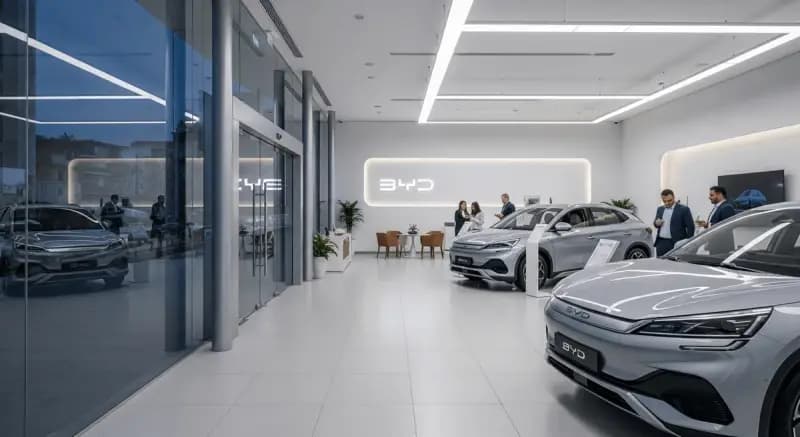
Chinese automotive giant BYD has officially launched its India operations with three new electric vehicle models, marking one of the most significant foreign entries into the Indian passenger car market in recent years.
The launch includes the Atto 3 compact SUV (Rs 34 lakh), the Seal sedan (Rs 41 lakh), and the Dolphin hatchback (Rs 18 lakh), all positioned to compete directly with Tata's Nexon EV, MG ZS EV, and the upcoming Maruti Suzuki electric offerings.
Manufacturing Strategy
Unlike other Chinese companies that have faced regulatory hurdles, BYD has adopted a cautious approach. The company will initially import completely built units (CBUs) while simultaneously setting up a manufacturing facility in Tamil Nadu with an investment of Rs 2,000 crore.
"We are committed to the Make in India initiative," said BYD India President Sanjay Gopalakrishnan. "Our Tamil Nadu plant will be operational by Q3 2026, bringing prices down significantly."
Technology Advantage
BYD brings its proprietary Blade Battery technology to India, which the company claims offers superior safety and longevity compared to conventional lithium-ion batteries. The Blade Battery uses lithium iron phosphate (LFP) chemistry, eliminating concerns about thermal runaway that have plagued some competitors.
Related Reading
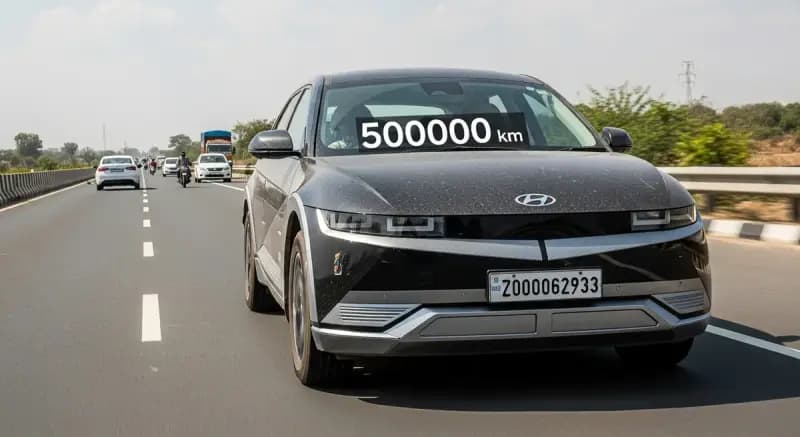
Long-Term Review: 50,000 km with the Hyundai Ioniq 5The Atto 3 offers a claimed range of 521 kilometers, while the Seal promises 580 kilometers, figures that, if accurate, would set new benchmarks in the Indian market.
Market Response
Industry observers are divided on BYD's prospects. While the company's technology is undeniably advanced, anti-China sentiment following border tensions could affect consumer acceptance.
"The technology is impressive, but Indian consumers are increasingly conscious of where their cars come from," notes auto analyst Pradeep Saxena. "BYD will need to emphasize its local manufacturing plans heavily."
The company has already received over 5,000 pre-bookings for the Atto 3, suggesting significant consumer interest despite geopolitical concerns.
Consumer Perspective
For Indian car buyers, these changes present both opportunities and considerations. Price-conscious consumers may find new value propositions emerging, while those focused on long-term ownership costs should factor in evolving technology and service networks. The market is becoming increasingly sophisticated, requiring buyers to make more informed decisions.
Regional Variations
The impact will vary across different Indian markets. Metropolitan areas with higher purchasing power may see accelerated adoption of new technologies and brands. Tier-2 and Tier-3 cities, which increasingly drive automotive sales growth, will likely follow different adoption curves based on infrastructure readiness and price sensitivity.
Related Reading
The Service Advisor: Psychology of the Dealership ExperienceLooking Ahead
As the Indian automotive market matures, developments like these reshape the competitive landscape. The coming years will reveal which players successfully navigate these transitions and which struggle to adapt. Consumers ultimately benefit from increased competition and innovation, though the transition period may bring uncertainty for some segments.
Brought to you by Nxcar , where our love for cars, from timeless classics to modern marvels, fuels everything we do. Stay informed, stay passionate.