Electric vehicles are transforming transportation, but there's an elephant in the room nobody wants to discuss: what happens when these cars enter the used market in volume? The answer may surprise first-generation EV buyers, and not pleasantly.
Battery Degradation Reality
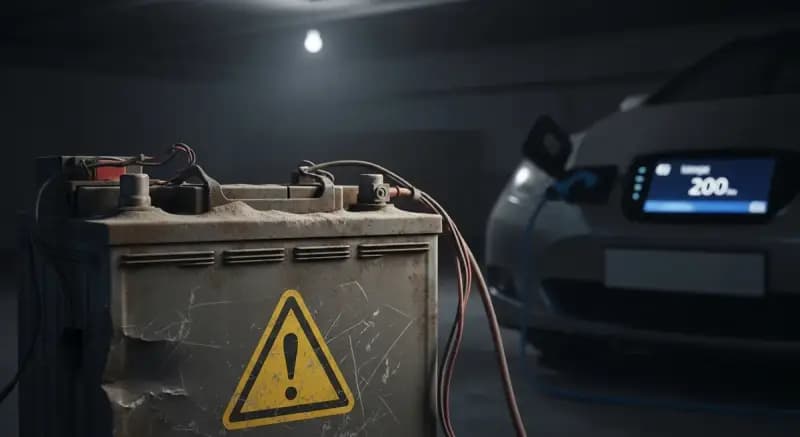
EV batteries degrade over time and use. A 5-year-old EV might retain only 85-90% of its original capacity. For a car with 400 km new range, that's 340-360 km, still usable. But the used buyer pays for 400 km capability, not 350 km reality.
Worse, the remaining degradation isn't linear. The battery might decline faster as it ages. That 350 km could become 280 km in another 3 years. Predicting this trajectory for a specific vehicle is currently impossible.
Related Reading
Cars That Offer the Best Mileage on Indian HighwaysThe Replacement Cost Problem
When batteries degrade beyond usability, replacement costs are staggering. A new battery for a Nexon EV costs Rs 5-6 lakh, roughly 50% of the car's original price. For premium EVs, battery replacement can exceed Rs 10 lakh.
This creates bizarre economics. A 7-year-old EV might be worth Rs 4 lakh but face Rs 6 lakh battery replacement. No rational buyer pays Rs 10 lakh for a car worth Rs 4 lakh. The vehicle becomes economically unrepairable and essentially worthless.
No Established Market
Used car dealers have decades of experience valuing petrol and diesel vehicles. They can assess engine condition, estimate remaining life, and price accordingly. EVs are different: evaluating battery health requires specialized equipment and expertise that most dealers lack.
This uncertainty suppresses used EV values as buyers price in risk. First-generation EV owners face sharper depreciation than they expected because the resale market can't confidently value their vehicles.
The Transition Challenge
None of this means EVs are bad, they're the future. But we're in an awkward transition period where first-generation technology will depreciate harshly. If you're buying an EV, plan to keep it long-term. Don't expect strong resale.
The market will mature. Battery technology will improve. Residual value guarantees will emerge. But early adopters will pay a premium in depreciation. That's the honest truth nobody selling EVs wants to admit.
The Bigger Picture
These concerns aren't isolated incidents but symptoms of systemic issues in India's automotive retail landscape. The power imbalance between dealers and consumers, combined with information asymmetry, creates conditions ripe for exploitation. Understanding this context helps buyers protect themselves and push for better practices.
Related Reading
The Maruti 800: The Car That Motorized IndiaPractical Implications
Beyond the obvious frustrations, these issues have tangible financial consequences. Buyers who fall victim to these practices may find themselves underwater on their purchases within months. The hidden costs accumulate, from overpriced accessories to unnecessary add-ons, eroding the value proposition that initially attracted them to a particular vehicle.
Curated by Nxcar: We love cars, but we love our readers more. Here's the truth you need to make better decisions.