
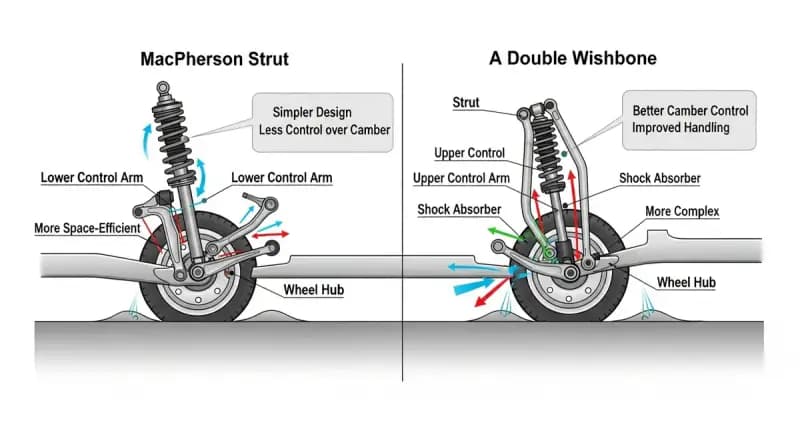
Wheel alignment affects tire wear, fuel consumption, handling, and safety. Yet many drivers neglect it until obvious symptoms appear. Understanding alignment parameters enables proactive maintenance and informed service evaluation.
Camber
Camber is the wheel's inward or outward tilt viewed from the front. Negative camber (top tilted inward) improves cornering grip by optimizing contact patch during body roll. Excessive negative camber accelerates inner tire wear. Most vehicles spec slight negative camber for handling with acceptable wear.
Toe
Toe measures whether wheels point inward (toe-in) or outward (toe-out) viewed from above. Slight toe-in provides straight-line stability, the wheels naturally want to track straight. Incorrect toe causes rapid, asymmetric tire wear and poor handling.
Caster
Caster is the steering axis tilt viewed from the side. Positive caster (axis tilted rearward) creates self-centering tendency, release the steering wheel and it returns center. More caster improves stability but increases steering effort.
Alignment Symptoms
Pulling to one side suggests unequal camber or caster. Steering wheel off-center indicates toe misalignment. Rapid or uneven tire wear results from any misalignment. A crooked steering wheel with straight travel often means the subframe or steering rack was disturbed during previous work.
Service Recommendations
Check alignment annually, after suspension component replacement, or after significant impact (pothole, curb strike). Most vehicles allow only toe adjustment, camber and caster adjustments require special kits or indicate bent components.
Quality Considerations
Four-wheel alignment is essential for modern vehicles (even FWD cars have rear alignment affecting handling). Laser or computer alignment provides accurate measurement. Cheap alignment shops may lack precision equipment, this is not a service to discount hunt.
Maintenance Implications
Technical understanding translates directly to maintenance strategy. Knowing how systems function helps owners prioritize servicing, recognize warning signs, and communicate effectively with service advisors. This knowledge pays dividends throughout the ownership period, often resulting in better vehicle condition and higher resale values.
Technical Considerations
Understanding these engineering principles helps owners make better maintenance decisions. When mechanics explain repairs, informed owners can evaluate recommendations critically. This knowledge prevents unnecessary work while ensuring critical maintenance isn't deferred. The goal isn't to become a mechanic but to be a smarter vehicle owner.
The Nxcar team believes that every car lover should understand their machine. This article helps bridge that gap.