The tire is your car's only contact with the road, a contact patch approximately the size of four postcards supporting tons of vehicle weight. Understanding tire technology reveals why this seemingly simple component is extraordinarily complex.
Compound Chemistry
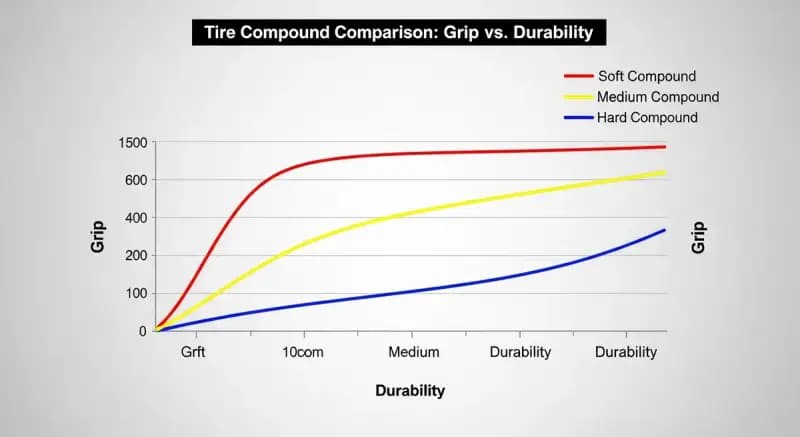
Tire rubber isn't actually rubber, it's a complex polymer mixture optimized for conflicting requirements. Soft compounds grip better but wear faster. Hard compounds last longer but grip less. Adding silica improves wet grip but increases rolling resistance.
Each manufacturer guards compound formulas like state secrets. The differences between premium and budget tires lie primarily in these chemical choices.
Tread Design
Tread patterns serve multiple purposes: channeling water to prevent hydroplaning, providing biting edges for traction, managing heat buildup, and controlling noise. Asymmetric designs optimize different zones for different functions.
Sipes, tiny cuts within tread blocks, dramatically improve wet and winter grip by creating additional edges. Their pattern and density are heavily engineered.
Construction
Modern tires are multi-layer constructions: inner liner maintaining air pressure, body plies providing structure, belt packages stabilizing the tread area, and bead bundles anchoring to the wheel. Each layer serves specific functions.
Performance Trade-offs
No tire excels at everything. Ultra-high-performance tires sacrifice longevity for grip. Touring tires sacrifice ultimate grip for comfort and durability. All-terrain tires sacrifice on-road refinement for off-road capability.
Choosing tires means prioritizing what matters for your specific use case, there are no universal best choices.
Technical Considerations
Understanding these engineering principles helps owners make better maintenance decisions. When mechanics explain repairs, informed owners can evaluate recommendations critically. This knowledge prevents unnecessary work while ensuring critical maintenance isn't deferred. The goal isn't to become a mechanic but to be a smarter vehicle owner.
Real-World Applications
Theory translates to practice in specific ways. Under Indian driving conditions, with their unique combination of heat, dust, traffic, and road quality, these technical factors manifest differently than in laboratory conditions. Owners should calibrate expectations accordingly, recognizing that advertised specifications often assume ideal conditions.
The Nxcar team curated this analysis with the same precision we admire in automotive engineering. Knowledge is the fuel for smarter decisions.