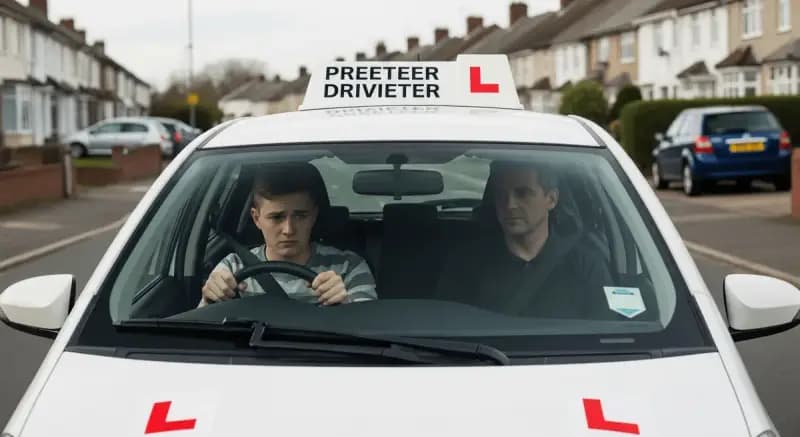
Obtaining a driver's license is a universal rite of passage, but the path varies wildly across nations. The Indian driving test, often derided as trivially easy, contrasts sharply with rigorous international standards. This comparison reveals what countries prioritize in driver preparation.
The Indian Approach
India's driving test typically involves driving through a basic obstacle course: figure-8 patterns, a slope, and perhaps a short road section. Many RTOs require minimal skills demonstration. Observers have noted tests passed without demonstrable competence.
The result: many licensed drivers lack fundamental skills. Lane discipline, mirror usage, and safe following distance are learned, if at all, after licensing. The road becomes the real training ground.
The German Model
Germany requires approximately 25-45 hours of professional driving instruction, including mandatory highway and night driving. Written tests are substantial. Road tests last 45-75 minutes through varied conditions. Failure rates exceed 30%.
The investment is substantial, €2,000-3,000 for license acquisition. But German road fatality rates are among the world's lowest despite autobahn speeds.
Japanese Precision
Japan requires extensive training with emphasis on pedestrian awareness and precise vehicle control. Tests include reversing into marked spaces with centimeter-level accuracy. Many applicants fail multiple times.
Cultural Implications
Testing standards reflect cultural priorities. Germany values systematic competence. Japan values precision and consideration. India, where car ownership is recent and expanding rapidly, prioritizes access over gatekeeping.
Reform Possibilities
Graduated licensing (restricting new drivers from nighttime or highway driving) has shown success internationally. Training mandates improve outcomes if enforced. India's challenge: implementing standards without excluding economic participants from mobility.
The driving test is more than bureaucratic requirement, it's a statement about what society expects from its drivers.
Generational Perspectives
Different generations relate to automotive culture differently. Those who remember the scarcity of the license raj era view car ownership through a different lens than millennials who've known only market abundance. These varying perspectives create rich narratives around automotive history and future directions.
Regional Variations
India's diverse regions each have unique automotive cultures. From the decorated trucks of Punjab to the vintage car rallies of Mumbai to the modified vehicles of Chennai, local traditions shape how communities relate to automobiles. This diversity is part of India's rich automotive heritage.
Preservation and Memory
As automotive technology evolves rapidly, preserving heritage becomes increasingly important. Museums, collector communities, and documentation efforts ensure that future generations can connect with automotive history. The stories embedded in these machines deserve to be remembered and celebrated.
From Nxcar's memory lane: Our team cherishes the stories that make automobiles unforgettable.