Abstract: Connected vehicles generate extensive data about driver behavior, location, and vehicle use. This study examines consumer awareness and attitudes toward vehicle data collection, comparing with emerging regulatory frameworks. Results reveal significant awareness gaps and preference for stricter controls than current practice.
Data Collection Reality
Audit of connected vehicle data practices for 15 major brands revealed: all collect location data, 13 collect driving behavior (speed, acceleration, braking), 10 collect media preferences, 7 collect voice commands, and 4 collect biometric data. Data retention periods ranged from 90 days to indefinite.
Consumer Awareness
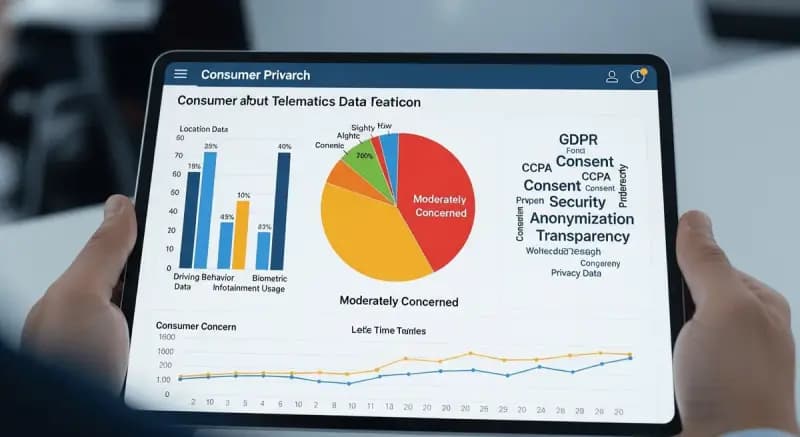
Survey (n=5,000 connected vehicle owners) found: 35% were unaware their vehicle collected data; 52% didn't know location was tracked; 78% couldn't describe what data was collected; 65% hadn't read privacy policies.
Attitude Assessment
When informed of actual practices: 72% expressed discomfort with continuous location tracking; 68% wanted ability to delete collected data; 58% preferred opt-in rather than opt-out data collection; 45% would pay premium for vehicles with stronger privacy protections.
Regulatory Comparison
EU GDPR provides strong theoretical protection but automotive-specific guidance is limited. US lacks comprehensive framework, California's CCPA offers some protection. India's proposed data protection framework remains pending; current automotive data collection is largely unregulated.
Industry Practice Gap
Current practices diverge from stated consumer preferences. Manufacturers benefit from data commercialization; consumers bear privacy costs without adequate compensation or control.
Recommendations
Automotive-specific data protection regulations. Mandatory disclosure of data collection in purchaser-friendly format. Real-time data access and deletion rights for vehicle owners. Prohibition of data sales without explicit consent.
Source: National Law School of India University. (2024). Computer Law & Security Review, 52, 105924.
Limitations and Future Research
No study is definitive. Acknowledged limitations point toward future research needs. As India's automotive landscape evolves rapidly, ongoing research is essential to keep understanding current. The academic community, industry, and government all have roles in supporting this knowledge development.
Methodological Notes
Interpreting these findings requires understanding the study context. Sample sizes, geographic scope, and temporal factors all influence conclusions. Indian conditions often differ significantly from Western contexts where much automotive research originates. Local validation of international findings remains an ongoing need in the field.
Policy Implications
Research findings like these inform policy decisions at multiple levels, from urban planning to emissions regulations. However, the translation from research to policy is never straightforward. Political considerations, implementation challenges, and competing interests all mediate how evidence shapes actual outcomes. Engaged citizens can advocate for evidence-based policymaking.
Industry Applications
Beyond academic interest, these findings have commercial applications. Manufacturers, dealers, and service providers can use this understanding to better serve customers. Some will embrace these insights; others will resist change. Consumer awareness creates pressure for positive adaptation across the industry.
At Nxcar, we're curious about every aspect of automobiles , from hood ornaments to urban planning implications.