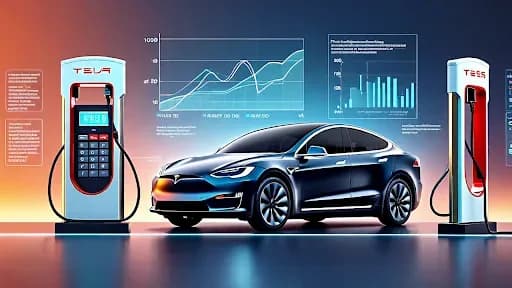
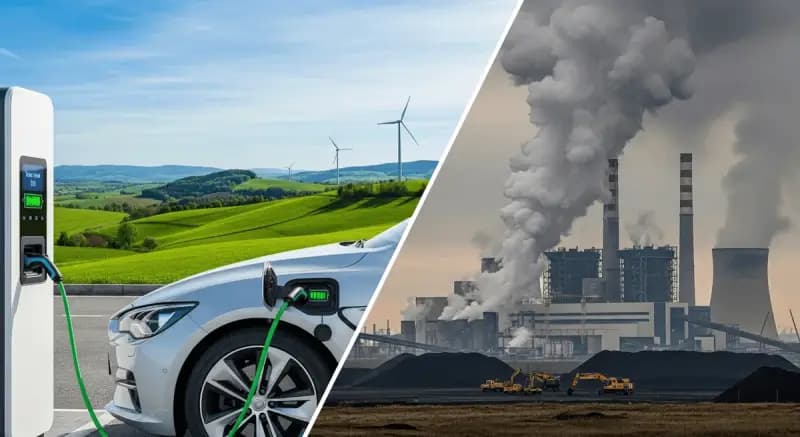
Before you congratulate yourself on saving the planet with your new electric vehicle, let's examine an inconvenient truth: depending on how and where it was manufactured, and how you charge it, your EV might have a larger carbon footprint than a fuel-efficient diesel. This isn't climate denial, it's scientific reality.
The Manufacturing Problem
Battery production is extraordinarily energy-intensive. A 60 kWh battery (typical for mid-range EVs) requires approximately 17 tonnes of CO2 to manufacture, according to Swedish Environmental Research Institute data. That's before the car even moves an inch.
Where do most EV batteries come from? China, where 60% of electricity comes from coal. The factory producing your "zero-emission" vehicle is powered by some of the dirtiest energy sources on Earth. The irony is almost poetic.
Related Reading
10 Year EV Cost Comparison. Full Engineering Cost ModelThe Indian Grid Reality
In India, 70% of electricity comes from coal and gas. When you plug in your EV overnight, you're effectively running it on fossil fuels, just displaced to a power plant rather than your tailpipe. A study by the Council on Energy, Environment and Water found that an EV in India produces approximately 156 grams of CO2 per kilometer when accounting for grid emissions.
A modern diesel sedan? Around 120-140 grams per kilometer. Yes, you read that right. In coal-dependent grids, efficient diesels can be cleaner than EVs.
Related Reading
CVT vs DCT vs Torque Converter: The Transmission GuideThe Mining Scandal
Let's discuss what goes into your battery: lithium, cobalt, nickel, manganese. Lithium mining in South America has devastated indigenous communities and dried up aquifers. Cobalt from the Congo is extracted using child labor in conditions resembling modern slavery. Nickel mining in Indonesia has destroyed rainforests.
Is shifting environmental destruction from your exhaust pipe to a mine in another country really "eco-friendly"? Or is it just moving the problem somewhere you don't have to see it?
Related Reading
Urban Mobility Patterns Post-Pandemic: A GPS AnalysisThe Honest Path Forward
None of this means EVs are bad. As grids clean up and battery technology improves, the equation shifts favorably. In places with high renewable penetration (think Norway or Karnataka), EVs are genuinely cleaner.
But claiming moral superiority while driving an EV manufactured in a coal-powered factory and charged from coal-powered electricity is self-delusion. The honest approach: acknowledge the complexity, support grid decarbonization, and stop pretending individual consumption choices are sufficient climate action.
Related Reading
Car Collections: The Psychology of Automotive AccumulationReal environmentalism requires systemic change, not just swapping one consumer product for another.
The Bigger Picture
These concerns aren't isolated incidents but symptoms of systemic issues in India's automotive retail landscape. The power imbalance between dealers and consumers, combined with information asymmetry, creates conditions ripe for exploitation. Understanding this context helps buyers protect themselves and push for better practices.
Practical Implications
Beyond the obvious frustrations, these issues have tangible financial consequences. Buyers who fall victim to these practices may find themselves underwater on their purchases within months. The hidden costs accumulate, from overpriced accessories to unnecessary add-ons, eroding the value proposition that initially attracted them to a particular vehicle.
What Buyers Can Do
Empowered consumers are the best defense against questionable practices. Thorough research before entering a showroom, willingness to walk away from unfavorable deals, and sharing experiences with fellow buyers create accountability. Online forums and owner communities have become invaluable resources for cutting through marketing noise.
Industry Response
Some manufacturers recognize that customer dissatisfaction ultimately hurts their brands. Progressive companies are implementing stricter dealer oversight, transparent pricing, and customer feedback mechanisms. However, change is slow, and buyers should remain vigilant rather than assuming all players have reformed.
The Nxcar team isn't afraid to ask tough questions. Our passion for cars includes demanding better for every buyer in India.