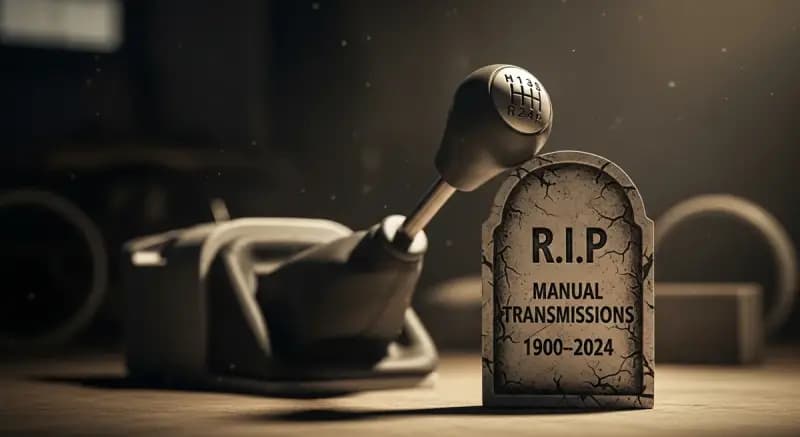
Every time an enthusiast car comes out exclusively with an automatic transmission, a vocal minority throws a tantrum about the death of "real driving." They post nostalgic odes to heel-toe downshifts and claim automatics are for people who "can't drive." Let me explain why they're wrong and why the manual transmission's death is actually a good thing.
Automatics Are Better Now
Modern dual-clutch and torque-converter automatics shift faster than any human possibly can. A Porsche PDK changes gears in 200 milliseconds. A good human driver takes 400-600 milliseconds. In performance driving, the supposed justification for manuals, automatics are objectively superior.
They're also more fuel-efficient. Continuously Variable Transmissions (CVTs) keep engines in optimal RPM ranges that human driving can't match. An automatic Swift gives better mileage than a manual Swift. The "manuals are more efficient" claim died around 2015.
Related Reading
Global Chip Shortage Eases: Indian Car Waiting Periods Drop 50%The Romance is Nostalgia
Manual transmission advocacy is really about nostalgia, not performance. People remember learning to drive, the satisfaction of mastering clutch control, the feeling of engagement with the machine. These are real emotions, but they don't make manuals objectively better.
You know what I remember? Stalling in traffic. Aching left leg in Mumbai jams. Clutch slip on Shimla hills. The "engagement" of manual driving is actually labor, labor we've romanticized because we associate it with youth and freedom.
Related Reading
Engine Oil Viscosity and Specifications DecodedTraffic Reality
India has some of the worst traffic in the world. Average speeds in Mumbai and Delhi are under 20 km/h during peak hours. In these conditions, a manual transmission is torture: clutch-brake-clutch-brake for hours. Your left knee develops pain, your back hurts, you arrive at work exhausted.
Automatics transform this experience. You brake and accelerate smoothly. Your left leg rests. You arrive calm instead of frustrated. This isn't laziness, it's intelligent ergonomics.
Let It Go
The manual transmission was a technological solution to a mechanical problem: connecting engine to wheels efficiently. Better solutions now exist. Holding onto manuals is like preferring typewriters to keyboards because pressing keys feels more "engaged."
Enthusiasts can keep their weekend track-day manuals. But pretending automatics are inferior for daily driving is denial dressed as discernment.
Practical Implications
Beyond the obvious frustrations, these issues have tangible financial consequences. Buyers who fall victim to these practices may find themselves underwater on their purchases within months. The hidden costs accumulate, from overpriced accessories to unnecessary add-ons, eroding the value proposition that initially attracted them to a particular vehicle.
What Buyers Can Do
Empowered consumers are the best defense against questionable practices. Thorough research before entering a showroom, willingness to walk away from unfavorable deals, and sharing experiences with fellow buyers create accountability. Online forums and owner communities have become invaluable resources for cutting through marketing noise.
Industry Response
Some manufacturers recognize that customer dissatisfaction ultimately hurts their brands. Progressive companies are implementing stricter dealer oversight, transparent pricing, and customer feedback mechanisms. However, change is slow, and buyers should remain vigilant rather than assuming all players have reformed.
The Nxcar team believes that passion and practicality can coexist. This article is proof of our commitment to both.