Electric three-wheelers have crossed a historic milestone, accounting for more than 50% of all new three-wheeler registrations in India for the first time in any quarter. Data from the Vahan portal shows that 142,000 electric three-wheelers were registered in Q3 2025, compared to 128,000 petrol/diesel/CNG units.
The tipping point has arrived faster than most industry analysts predicted, driven by the compelling total cost of ownership advantage of electric over conventional three-wheelers.
Economics Driving Adoption
An electric auto-rickshaw costs approximately Rs 1.80 lakh (after subsidies), compared to Rs 2.5 lakh for a CNG auto and Rs 2.2 lakh for a diesel auto. But the real advantage emerges in operating costs: electric autos cost Rs 0.40 per kilometer to operate versus Rs 2.50 for CNG and Rs 3.20 for diesel.
Related Reading
Will Petrol Prices Ever Come Down in India?For an auto driver covering 100 kilometers daily, this translates to savings of Rs 75,000-100,000 annually, often sufficient to pay EMIs on the slightly higher upfront cost.
Infrastructure Growth
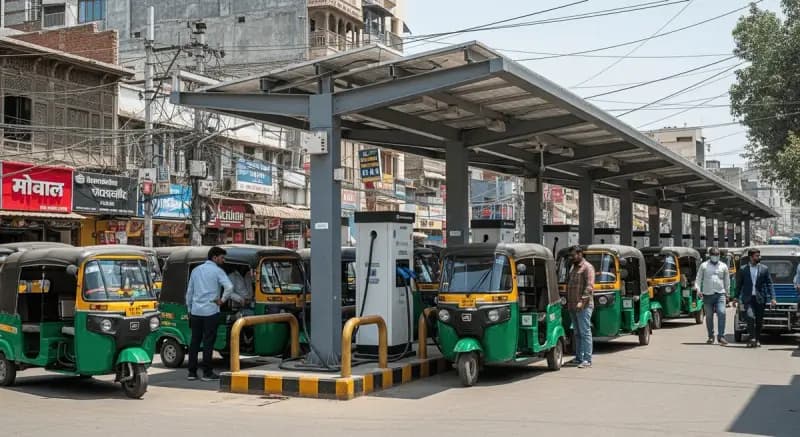
Charging infrastructure has expanded rapidly. Major cities now have dedicated three-wheeler charging hubs at key locations: auto stands, markets, railway stations, and bus terminals. Battery swapping networks, pioneered by Sun Mobility and Battery Smart, allow drivers to exchange depleted batteries for charged ones in under two minutes.
"Battery swapping has been transformational," says Sun Mobility CEO Chetan Maini. "It eliminates charging time and range anxiety, the two biggest barriers to adoption."
Market Leaders
Mahindra Treo leads the market with 35% share, followed by Piaggio Ape E-City at 22% and Bajaj RE Electric at 18%. Numerous local manufacturers have also entered, though quality concerns persist for some low-cost entrants.
State governments have provided crucial support through demand incentives, registration tax waivers, and permits reserved exclusively for electric vehicles. Delhi mandates that all new auto permits be for electric vehicles only.
Industry Impact
This development carries significant implications for India's automotive ecosystem. Industry analysts suggest that the ripple effects will be felt across the supply chain, from component manufacturers to dealership networks. The competitive landscape is likely to shift as established players respond to market dynamics and consumer expectations evolve.
Consumer Perspective
For Indian car buyers, these changes present both opportunities and considerations. Price-conscious consumers may find new value propositions emerging, while those focused on long-term ownership costs should factor in evolving technology and service networks. The market is becoming increasingly sophisticated, requiring buyers to make more informed decisions.
Regional Variations
The impact will vary across different Indian markets. Metropolitan areas with higher purchasing power may see accelerated adoption of new technologies and brands. Tier-2 and Tier-3 cities, which increasingly drive automotive sales growth, will likely follow different adoption curves based on infrastructure readiness and price sensitivity.
Proudly brought to you by Nxcar , India's platform for car lovers who appreciate the journey as much as the destination.