
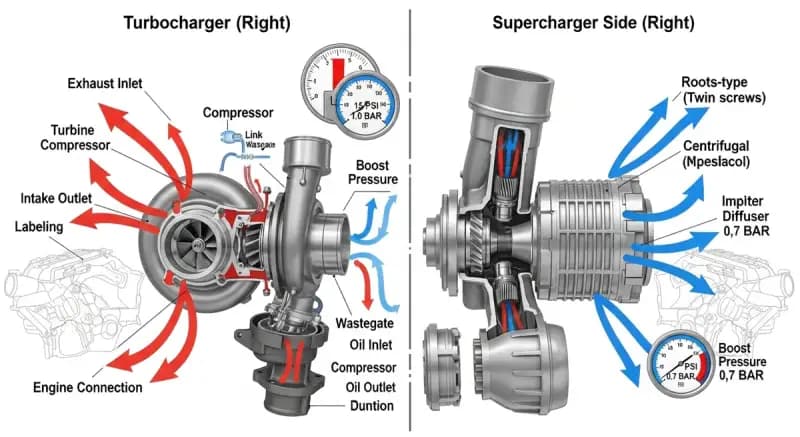
Turbocharged engines dominate modern automotive powertrains, offering power density impossible with natural aspiration. But turbo technology varies significantly, and reliability concerns persist. Here's what you need to know.
Basic Principles
Turbochargers use exhaust gas energy to compress intake air, forcing more oxygen into cylinders for more powerful combustion. A turbine wheel in the exhaust stream drives a compressor wheel in the intake, simple concept, complex execution.
Lag and Response
Traditional turbos require exhaust gas buildup before providing boost, turbo lag. Modern solutions include: twin-scroll housings separating exhaust pulses, variable geometry turbines adjusting to engine speed, and electric-assisted compressors providing immediate response.
Small turbos spool quickly but limit peak power. Large turbos provide more power but suffer lag. Twin-turbo systems try to optimize both, small turbo for response, large for power.
Reliability Considerations
Turbochargers spin at 150,000+ RPM and reach 1000°C in the exhaust housing. This extreme environment demands quality bearings, heat management, and proper oil supply. Failures typically result from: oil starvation (often from hot shutdowns without cool-down), contaminated oil, or manufacturing defects.
Best Practices
Use manufacturer-specified oil grades religiously. Allow cool-down periods after hard driving, idle for 30-60 seconds before shutdown. Address any unusual noises or smoke immediately. Replace aging turbos before catastrophic failure damages engines.
Properly maintained, modern turbos last 150,000+ km. Neglected, they can fail in 50,000 km with expensive collateral damage.
Real-World Applications
Theory translates to practice in specific ways. Under Indian driving conditions, with their unique combination of heat, dust, traffic, and road quality, these technical factors manifest differently than in laboratory conditions. Owners should calibrate expectations accordingly, recognizing that advertised specifications often assume ideal conditions.
Future Developments
Automotive technology continues evolving rapidly. What seems cutting-edge today becomes standard tomorrow. Understanding current technical foundations helps owners anticipate future developments and make purchase decisions that won't become obsolete prematurely. The pace of change, particularly in electrification and connectivity, makes this foresight increasingly valuable.
Maintenance Implications
Technical understanding translates directly to maintenance strategy. Knowing how systems function helps owners prioritize servicing, recognize warning signs, and communicate effectively with service advisors. This knowledge pays dividends throughout the ownership period, often resulting in better vehicle condition and higher resale values.
At Nxcar, we're fascinated by what makes cars tick. This technical exploration reflects our team's deep appreciation for automotive innovation.